News
Brand Event Gazebos That Work Harder Outdoors

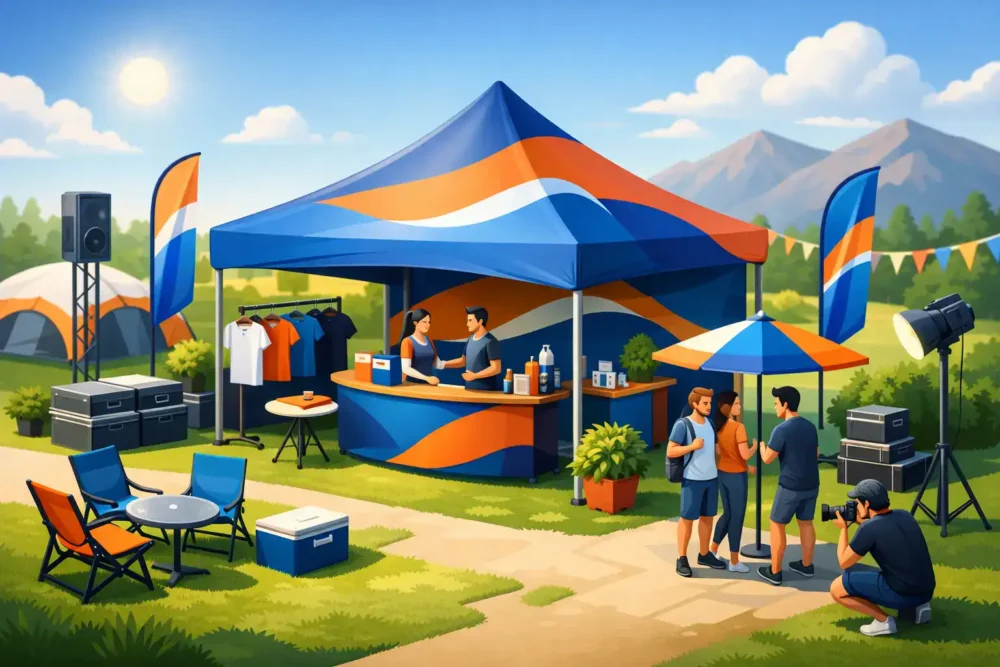
A busy event field gives visitors seconds to decide where to stop. Brand event gazebos make that decision easier: they put your name, colours and key message above the crowd while giving your team a practical covered base for conversations, samples, registrations or sales.
For UK businesses, the right gazebo is not simply an outdoor shelter with a logo added afterwards. It is a reusable display asset. It needs to be quick to set up, stable in changing weather, clear from a distance and suitable for the way your team actually works on event day. Get those details right and one branded gazebo can earn its place at trade shows, local fairs, sports days, open days, charity events, construction launches and promotional roadshows for years.
What brand event gazebos need to achieve
The main job is visibility. A plain pop-up tent may protect staff from sun and showers, but it does little to tell passing visitors who you are. Printed canopies, valances and walls turn the same footprint into a recognisable branded space that works before a member of staff has said a word.
The second job is usability. Consider what must happen beneath the canopy. A retailer may need room for a counter, stock and a card machine. An exhibitor may need a small meeting area and brochure stand. A contractor or developer may use the space as an information point during a community consultation or site event. These uses call for different layouts, different levels of print coverage and, in some cases, side walls for privacy or wind protection.
Finally, a gazebo needs to look professional after repeated use. Outdoor events involve wet grass, uneven ground, muddy footwear, early starts and quick pack-downs. A cheap frame that flexes, catches or struggles to lock into place can cost more in lost time and poor presentation than it saves upfront.
Choose the right size before choosing the print
Gazebo branding works best when the frame size suits the activity. A compact 2m x 2m gazebo can be a sensible choice where pitch space is tight or the setup is simple. It is useful for product sampling, small retail promotions and registration points.
A 3m x 3m gazebo is often the most versatile event size. It gives enough room for a table, two or three staff members and display materials without dominating a standard pitch. For many SMEs, clubs and promotional teams, this is the practical middle ground between presence, portability and cost.
Larger spaces become worthwhile when visitors need to step inside, browse or wait. A 3m x 6m branded gazebo provides room for a longer counter, multiple product areas or a more substantial hospitality setup. It can also give brands greater impact at larger outdoor events, though it needs more clear ground, more manpower and more careful transport planning.
Do not assume bigger is always better. Event organisers may impose pitch limits, and a large canopy with sparse contents can feel empty. Start with the available footprint, the number of staff, your display equipment and how many visitors you expect to host at once.
Frame quality matters on every event day
The frame is the working part of the product. Look for a commercial-grade pop-up system with sturdy legs, reliable locking points and a folding design that allows efficient transport and setup. The right option depends on how often it will be used. A gazebo needed for one or two summer dates has different requirements from one travelling weekly with a sales team.
Weight is a trade-off. A heavier-duty frame usually offers more confidence and longevity, but it takes more effort to move and may require a larger vehicle. If staff regularly attend events without a full team, factor handling into the decision rather than focusing only on the printed finish.
Where to put your branding on a gazebo
A strong design does not need to cover every available panel with information. At an outdoor event, people often see the canopy from a distance, at an angle and while moving. Your brand name and a clear visual identity should do the hard work first.
The canopy valances are particularly valuable because they sit at eye level for approaching visitors. A logo, company name, website wording or short service line here can be read from several directions. Keep the type large, high contrast and uncluttered. Fine print and long service lists may look acceptable on screen but disappear across a busy field.
Printed walls add another level of presence. A full back wall creates a clean backdrop for staff, products and photographs, while side walls can make the pitch feel more enclosed and intentional. They are especially useful when the stand is set against a busy route, a car park or other competing exhibitors. Half walls can retain an open, welcoming feel while still carrying branding.
For maximum impact, use a consistent system rather than treating each panel as a separate advert. Match colours across the canopy, walls, flags, roller banners and table coverings. A visitor should be able to recognise your space from across the venue and confirm the brand once they reach it.
Design for distance, not just for close inspection
A practical gazebo design normally includes a prominent logo, one key message and colours that remain recognisable in daylight. Supporting details such as telephone numbers, QR codes or service lists can be added, but they should not compete with the main identity.
Avoid placing essential wording too close to seams, corners or frame lines. These areas can fold, crease or become partially hidden during use. Artwork should also account for the different viewing angles of roof sections and walls. A free design proof is useful here, as it allows you to check scale, placement and readability before production.
If your logo is small or complex, do not simply enlarge it without thought. Give it clear space, use a suitable background and make sure the brand name is readable independently of any intricate icon. In event conditions, clarity beats decoration.
Plan for British weather and venue rules
Outdoor display products must be treated as working equipment, not just promotional materials. Wind is the main concern. Every gazebo should be properly secured with suitable weights, straps or ground fixings, depending on the surface and the organiser’s rules. Never rely on the frame alone, and do not use a gazebo in conditions that make operation unsafe.
A grassy showground may allow stakes, while a hard-standing town-centre event may require weighted legs. Some venues specify minimum weight requirements for each leg, so ask before arriving. This is particularly important for public events where organisers need clear evidence that exhibitors have planned for safe setup.
Side walls improve shelter but can also catch the wind. Use them according to conditions, and make sure staff know when a change in weather means the display should be adapted or packed down. A professional event setup protects people, products and the brand’s reputation.
Rain also affects the working space. Consider a groundsheet, waterproof storage boxes and a layout that keeps leaflets, electrical items and stock away from the edges. If you expect queues, a branded flag or pavement sign positioned outside the gazebo can guide people in without forcing them to crowd around one opening.
Build an event kit around the gazebo
A branded gazebo performs best as the centre of a coordinated display. The canopy gets attention from a distance; the items around it help convert that attention into enquiries, sales or sign-ups.
Useful additions include feather flags for height, PVC banners for simple messages, roller banners for detailed services, branded tablecloths for a tidy counter and rigid boards for prices or directions. For product-led promotions, vinyl graphics and printed panels can help build a polished temporary retail space. The exact mix depends on your objective, but every item should support the same message rather than introduce a new one.
Keep a practical event checklist with the equipment. Alongside print materials, include weights, fixings, a mallet where permitted, cleaning cloths, cable ties, spare clips, a first-aid kit and weather protection for stock. This preparation is not glamorous, but it prevents a rushed setup from undermining a quality display.
Make the most of repeat use
A custom gazebo is better value when it is designed for more than one occasion. Avoid dates, venue names and short-term campaign wording on permanent canopy sections unless the event is recurring. Use core branding on the roof and valances, then change the message with banners, posters or removable display panels.
After each event, allow the canopy to dry fully before storing it. Brush off loose dirt, pack walls separately where possible and check the frame for damage before the next booking. Storing a wet gazebo in its bag is a quick route to mildew, unpleasant odours and a poor first impression at the next show.
For teams ordering several display items at once, working with one UK print supplier also helps keep colour, artwork and turnaround consistent. Big Value Banners can support this with custom printed event materials, free design assistance and production built around practical commercial use.
When your next event date is confirmed, start with the pitch plan rather than the artwork. Measure the space, decide how visitors will move through it, then create branding that is clear at a glance and useful once they step underneath it.


