News
Rigid Boards for Signs, Displays and Site Use

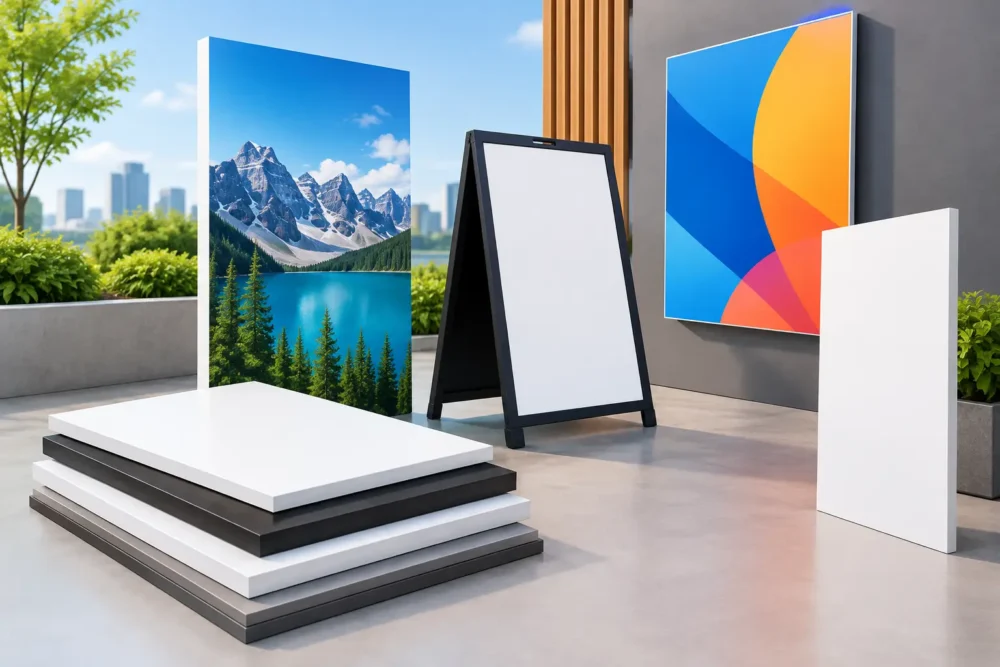
A site sign that curls at the edges, a retail panel that fades too quickly or an exhibition graphic that arrives looking flimsy can undermine a project before anyone reads the message. Rigid boards give businesses a professional, long-lasting format for printed information, branding and promotions, with material options to suit indoor displays, outdoor sites and demanding commercial environments.
What are rigid boards used for?
Rigid boards are flat printed panels made from firm materials rather than flexible banner vinyl. They provide a clean, solid surface for full-colour graphics and can be cut to custom sizes and shapes for a wide range of uses.
For construction firms and site managers, they are a practical choice for site entrance signs, safety notices, directional boards, hoarding panels and development branding. Retailers use them for point-of-sale displays, window notices, menus and promotional signage. Event teams rely on them for sponsor boards, exhibition panels, wayfinding and branded backdrops.
The right board creates a much sharper, more permanent presentation than a temporary paper poster. It is also easier to mount to walls, fencing, hoarding, frames and display systems. The key is matching the material to the location, expected lifespan and method of fixing.
Choosing rigid boards by material
Not every printed board performs in the same way. Price matters, but so do weather exposure, impact resistance, weight and the quality of finish required. Choosing a lower-cost option for a short indoor campaign can make good commercial sense. Using the same material for a long-term external sign may lead to an avoidable replacement cost.
Foamex board for versatile printed signage
Foamex is a PVC foam board with a smooth, bright surface that produces vivid printed graphics. It is lightweight, easy to handle and available in a choice of thicknesses. This makes it one of the most popular options for indoor signage, retail displays, estate agent boards, exhibition graphics and short-to-medium-term outdoor use.
A thinner Foamex board is well suited to wall-mounted notices or promotional panels where weight needs to be kept down. Thicker board feels more substantial and can be a better choice for freestanding display panels or signs that will be handled regularly. While it can be used outside, it is best considered for projects where extreme weather resistance is not the main requirement.
Dibond signs for long-term outdoor performance
Dibond is an aluminium composite material with a solid polyethylene core and aluminium faces. It is strong, flat and highly durable, giving it a premium finish for permanent or long-term signage.
For external business signs, construction site boards, directional signs, shop fascias and property development displays, Dibond is often the dependable option. It resists warping and handles changing weather conditions well, while the smooth surface supports crisp UV-printed colour. It costs more than Foamex, but the increased lifespan and professional appearance can offer better value where a sign needs to remain in place for months or years.
Correx for economical temporary signs
Correx is a fluted polypropylene board. Its internal channels make it lighter and more economical than solid boards, which is useful when a project requires multiple signs across a large area.
It is commonly used for estate agent boards, short-term event notices, directional signage, election boards and temporary construction messaging. Correx is weather-resistant and practical for external use, although it is not intended to deliver the same rigid, premium feel as Dibond. It can also flex in strong winds or when fixed without sufficient support, so consider the panel size and fixing points before ordering.
Acrylic for a polished finish
Acrylic provides a smart, glossy appearance that works particularly well for reception signs, office branding, wall displays and high-end retail environments. It can be printed directly or used with vinyl graphics, depending on the visual effect required.
It is not always the most suitable choice for busy construction sites or large-volume temporary signage because it is heavier and can be more vulnerable to impact. Where presentation is the priority, however, acrylic can make a strong impression.
Rigid boards for construction sites
Construction signage has to work harder than most. It may need to communicate legal information, reinforce safety procedures, direct delivery drivers and promote the contractor or developer, all while facing rain, wind, dust and regular site activity.
Dibond is a reliable choice for main site signage, health and safety boards, gate signs and branded development panels. For temporary phases, Correx or Foamex can help keep costs under control without compromising clear communication. Large printed hoarding panels may be produced in sections, making them easier to transport, position and replace when the site message changes.
Before selecting a board, consider who needs to read it and from what distance. A small sign with too much detail will not help a lorry driver approaching a site entrance, while a large panel with a short safety instruction may be more effective. Clear headings, high-contrast colours and appropriately sized text matter as much as the board material.
Size, thickness and fixing options
Custom sizing allows buyers to order a board that fits the available space rather than settling for a near match. Measure the mounting area carefully, including any posts, rails, fence panels or hoarding joins. If several signs are being installed together, confirm that they align consistently across the whole site or display area.
Thickness affects both appearance and handling. Thin boards are cost-effective and easy to mount indoors. Thicker boards offer more stability and are less likely to feel insubstantial on larger installations. For very large panels, splitting the design across several boards can be more practical for delivery, installation and future updates.
Fixing should be planned before print production begins. Boards can be drilled for screws, mounted with suitable adhesive, secured to fencing with cable ties or fitted to frames. For outdoor signs, use fixings designed for the surface and ensure there are enough fixing points around the edges to prevent movement in windy conditions. A board may be weather-resistant, but poor installation can still shorten its useful life.
Getting the print right
A well-made board starts with a clear artwork file. Supply logos, images and text at the correct size for the finished panel, especially for large site boards that will be viewed close up as well as from a distance. Low-resolution images may look acceptable on a screen but appear soft or pixelated when printed at scale.
Full-colour UV printing produces bright, durable graphics directly onto the board surface. It is suitable for detailed branding, photographs, safety symbols and strong block colours. If the sign will be exposed to sunlight for a long period, choose colours and artwork with that environment in mind. Very subtle tones can be harder to read at distance, particularly in poor weather.
For business buyers ordering multiple formats, keeping the same artwork, brand colours and typography across banners, boards and vinyl graphics creates a more organised result. Big Value Banners can help with free design support and proofs, giving customers a chance to check sizing, layout and key information before production.
Make the board work beyond the first installation
The best value does not always come from choosing the lowest-priced board. It comes from buying a material that lasts for the intended job, can be installed safely and still looks professional when customers, visitors or inspectors see it.
If a message is likely to change frequently, use a lower-cost temporary board or design the display so only one panel needs replacing. If the sign represents your business at a site entrance or outside your premises every day, invest in a durable material and clear print. A properly specified board is one less thing to revisit when the project is already moving at speed.


