News
Site Safety Boards for Contractors That Work

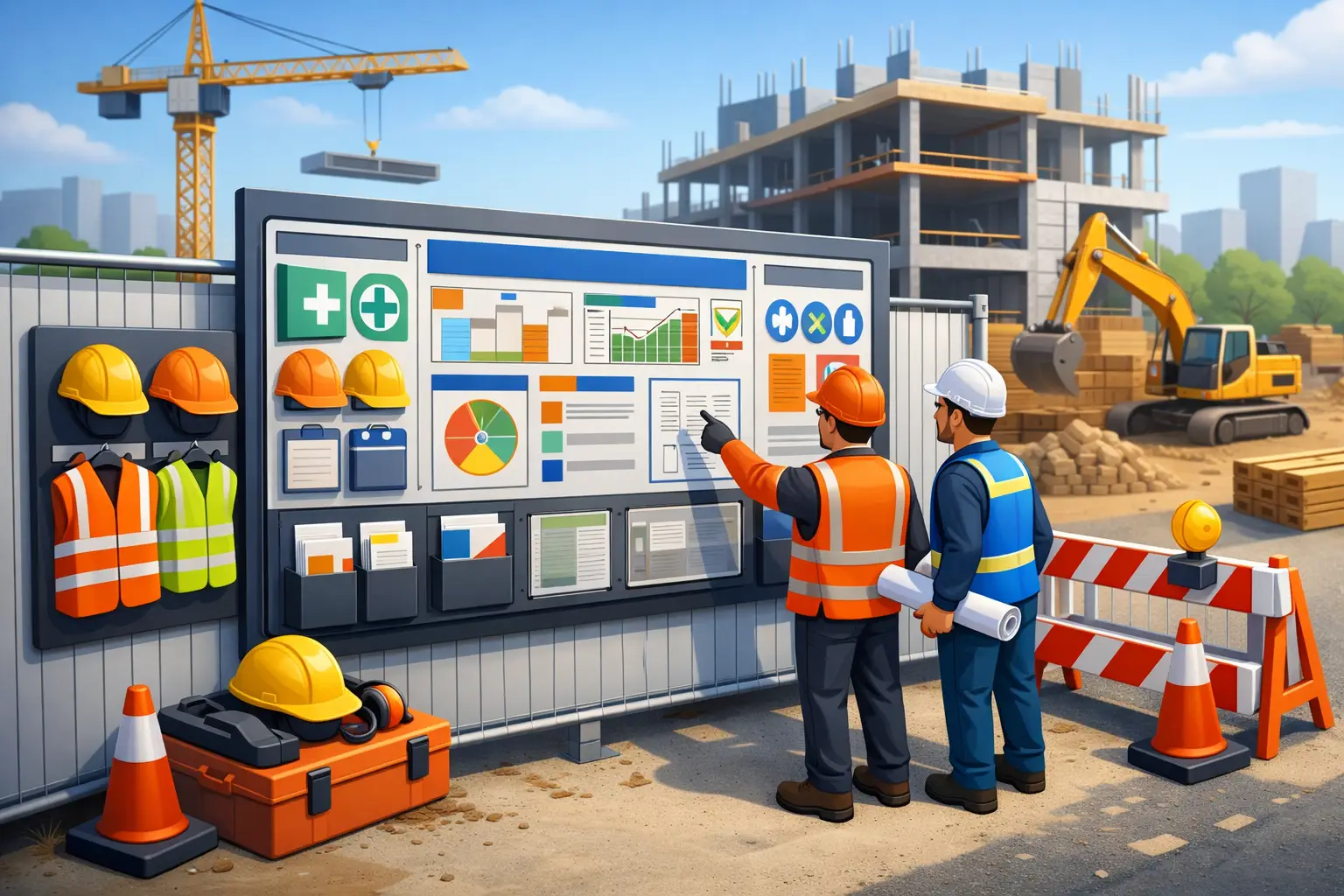
A busy construction entrance is a poor place for vague instructions. Visitors need to know where to report, operatives need clear reminders, and the public needs to see that the site is controlled. Well-planned site safety boards for contractors put essential information where people will actually see it, helping to create a safer, more professional site from day one.
For contractors, the right board is not simply a box-ticking exercise. It needs to be readable at a glance, tough enough for the location, and simple to update when personnel, hazards or procedures change. From small refurbishment projects to major infrastructure works, clear printed site signage supports day-to-day site management without slowing the job down.
What a good site safety board needs to do
A site safety board should bring key information together in one obvious place. It can show emergency contacts, first aid arrangements, fire assembly points, visitor instructions, mandatory PPE, welfare details and site rules. On larger projects, it may also display the principal contractor, project team, key milestones and environmental commitments.
The priority is clarity. A board packed with tiny text may contain every required detail, but it will not help someone standing at a gate in rain, poor light or a hard hat. Use a sensible hierarchy: the most urgent messages should be largest, supported by familiar symbols and short wording. Contact details and supporting information can sit below.
There is also a commercial benefit. A clean, full-colour board carrying your company branding signals that the site is organised and professionally managed. It reassures clients, visitors and neighbouring businesses while giving your team a consistent standard across every project.
Choosing site safety boards for contractors
The right material depends on where the board will be fitted, how long it will be needed and how exposed it will be. Price matters, but replacing a damaged board halfway through a project is rarely the cheapest option.
Foamex for short-term and sheltered use
Foamex is a lightweight rigid PVC board that works well for internal areas, welfare cabins, site offices and sheltered entrances. It provides a smooth surface for sharp full-colour printing and is easy to mount. It is a practical choice where boards need to be moved between areas or where a project has a shorter lifespan.
For outdoor use, make sure the board is properly fixed and positioned away from locations likely to take repeated impact. Foamex offers excellent value, but it is not always the best answer for a long-term, highly exposed perimeter.
Dibond for demanding outdoor locations
Dibond aluminium composite signs are a stronger option for exposed construction sites. The rigid composite construction is designed to stay flat and presentable outdoors, making it well suited to entrance boards, hoarding-mounted information panels and long-running projects.
Dibond costs more than lightweight board materials, but its durability can make it better value where weather, wind and regular site traffic are factors. For contractors managing multiple locations, specifying a consistent Dibond format for main safety boards can also make ordering and installation more straightforward.
Correx for temporary messages
For short-term notices, directional signs and temporary updates, Correx can be a cost-effective option. Its fluted structure keeps weight down, and it is easy to attach to fencing, hoarding or temporary frames. It is ideal when the message is time-sensitive, but it should not be treated as a permanent substitute for a main site information board.
Material choice should always reflect the job. A six-week internal fit-out and a two-year development with an exposed roadside entrance have very different requirements.
Plan the content before you print
The quickest way to create an ineffective board is to send a long document and ask for it to fit. Start by deciding what people must know immediately when they arrive on site. Usually, this includes sign-in arrangements, PPE requirements, emergency contacts, first aid information, fire procedures and a clear instruction not to enter without authorisation.
Next, consider your audience. Operatives may need a daily reminder of site rules, while visitors need concise directions and a reporting point. Members of the public may only need to understand that the area is restricted and who to contact if there is a problem. A single board can accommodate all three groups, provided the layout is organised.
Use logos and brand colours with restraint. Your company identity should be visible, but a safety board is first a working communication tool. High-contrast text, simple icons and generous spacing will do more for readability than a heavily branded design.
Keep information that changes regularly separate from fixed information where possible. For example, a durable main board can carry permanent site rules and emergency procedures, while a smaller replaceable panel displays current names, phone numbers or delivery instructions. This approach reduces waste and avoids reprinting a complete board every time a detail changes.
Size, position and fixing matter
A perfectly printed board cannot do its job if it is hidden behind parked plant, mounted too high or placed at the wrong entrance. Before ordering, inspect the intended location and think about viewing distance. A board outside a pedestrian gate can be smaller than one intended to be read from a vehicle queue or public footpath.
At a main entrance, allow enough room for people to stop and read without blocking access. Site offices and welfare areas may benefit from additional internal boards, especially if rules or emergency information need to be reinforced after induction. On larger sites, repeat key messages at access points, compound entrances and high-risk work areas rather than expecting one board to cover the whole project.
Fixings should suit both the board and the surface. Hoarding, Heras fencing, scaffold, brickwork and timber frames all need different approaches. Check that the installation is secure, that corners do not protrude into walkways, and that the board will not become a hazard in high winds. Where boards are fitted to temporary fencing, purpose-made fence banners or suitable fixings may be more appropriate than forcing a rigid panel into an unsuitable position.
Keep safety signage current and consistent
Safety information becomes less useful when it is out of date. A former site manager’s number, an old assembly point or expired PPE instruction can cause confusion at exactly the wrong time. Build a board check into regular site inspections and update the signage whenever the site layout, emergency arrangements or key contacts change.
Consistency also helps. If your main site board uses the same layout, colours and message order on every job, people know where to look. It makes procurement easier too. A proven template can be adapted quickly with the project name, client details and local contacts, while retaining the information your business expects every site to display.
This does not remove the need to meet your specific legal and contractual obligations. Required signs, risk assessments and site procedures vary by project, client and activity. Treat printed boards as a clear way to communicate your arrangements, not as a replacement for proper planning, inductions or statutory signage.
Make ordering simpler across your projects
Contractors often need more than one sign format. A main entrance board may sit alongside hoarding panels, Heras fence banners, directional signs, warning notices and branded vehicle gate banners. Ordering these together helps maintain a professional appearance and ensures the site is ready to open without chasing separate suppliers.
Custom sizing is particularly useful when working around existing hoarding bays, cabin walls or fence panels. Measure the available space carefully, including room for fixings, then choose dimensions that create a neat fit rather than an awkward compromise. Supplying your artwork early also gives time to check contact details, logos and copy before production.
Big Value Banners produces custom site safety boards with full-colour UV printing, practical material options and free design support. A proof before print gives contractors the chance to check that the information is accurate, legible and right for the site, while fast dispatch helps when programme dates are tight.
The best safety board is the one people can read, trust and act on. Give it a clear message, a durable format and a prominent position, and it becomes a useful part of running a safer, better organised site.


