News
Dibond Signs vs Foamex Boards: Which Is Best?

A sign can look excellent when it leaves the printer, then quickly become poor value if it warps on a windy site, fades in a shop window or gets damaged during regular handling. When comparing dibond signs vs foamex boards, the right choice comes down to where the sign will be used, how long it needs to last and how hard it will be worked.
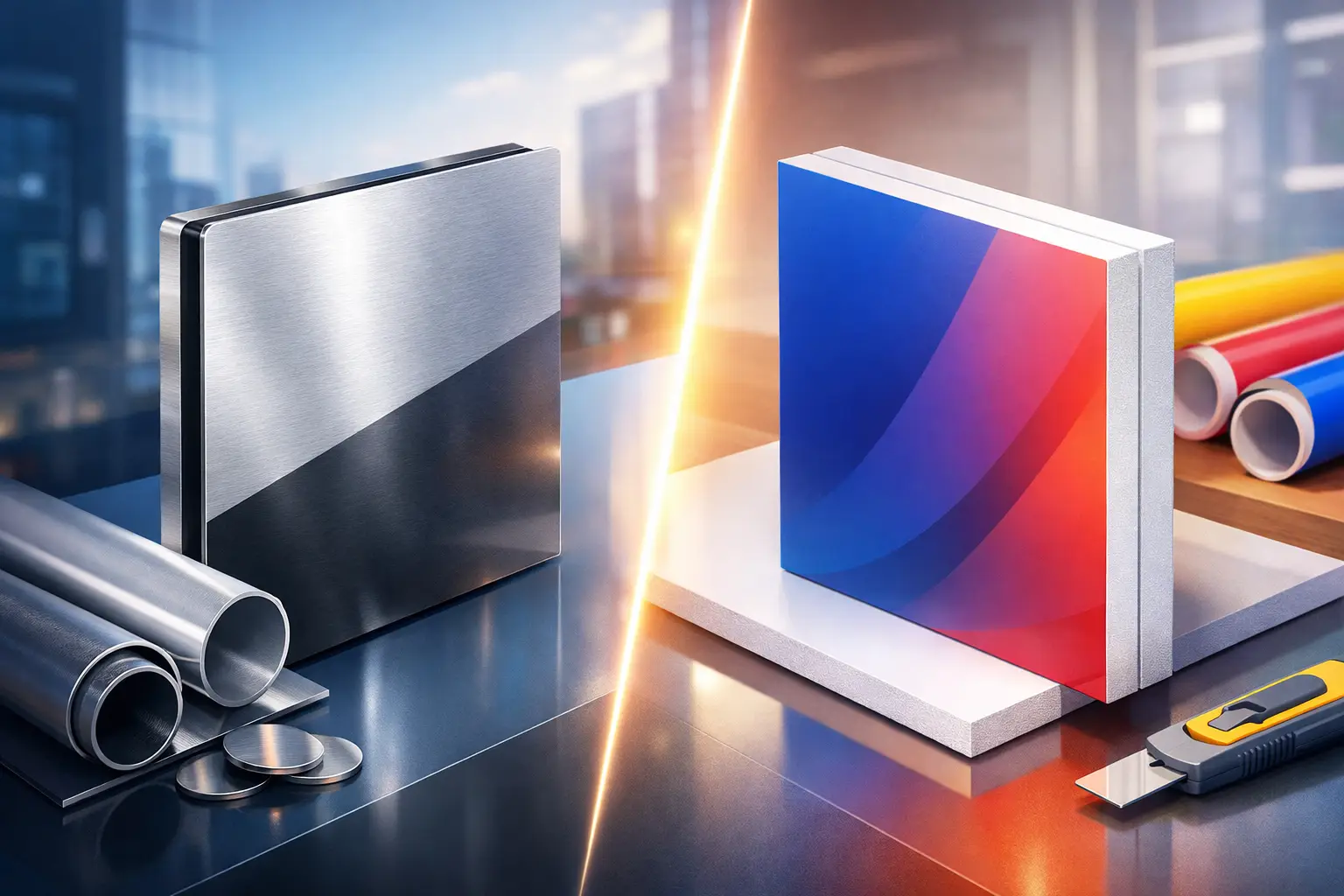
Both materials produce sharp, full-colour printed graphics and can be cut to custom sizes. Both are popular across construction, retail, events and property. The key difference is that Dibond is built for tougher, longer-term work, while Foamex offers a lighter, lower-cost solution for many short-term and indoor applications.
Dibond signs vs Foamex boards: key differences
Dibond is an aluminium composite material. It has two thin aluminium sheets bonded to a solid polyethylene core, creating a rigid, flat board with a premium feel. It is often used for external signage, estate agent boards, wayfinding, shop fascias, branded site signage and long-term information panels.
Foamex is a foamed PVC board. Despite the name, it is not a soft foam. It is a smooth, rigid plastic sheet that is lightweight, easy to handle and ideal for direct printing. Foamex is widely used for exhibition graphics, indoor promotional displays, point-of-sale signs, menu boards, temporary notices and budget-conscious site signage.
At a glance, both can look very similar. The difference becomes clearer once the board is installed. Dibond is generally more resistant to impact, weather and temperature changes. Foamex is lighter and more economical, but it is more likely to flex or suffer damage where conditions are demanding.
Choose Dibond for durable outdoor signage
If your board will be fixed outside for months or years, Dibond is usually the dependable option. Its aluminium faces help it stay flatter than lighter plastic boards, particularly at larger sizes. That matters on hoardings, gates, external walls and construction perimeters, where a bowed or tired-looking sign can undermine an otherwise professional site.
Dibond handles rain, changing temperatures and regular exposure to daylight well. It is a strong choice for contractor boards, safety messaging, directional signs, development branding and permanent business signage. Where signs are likely to be cleaned, knocked by equipment or exposed to busy public areas, the extra strength is worth considering.
It also gives a more substantial finish. For customer-facing applications such as showroom signs, office branding, property developments and retail displays, the material itself contributes to the overall impression. A Dibond sign feels solid and established, not temporary.
Dibond is not automatically necessary for every outdoor job. A short-term promotion, a weekend event or a temporary site notice may not need a premium board. But if replacement costs, repeat installation or an exposed location are part of the picture, choosing a longer-lasting material can be better value than buying the lowest-priced option first.
Best uses for Dibond signs
Dibond is particularly suited to long-term external displays, including shop signs, property boards, site entrance signs, directional panels, branded hoarding, car park signage and permanent health and safety messaging. It is also a sensible choice for signs installed at height or in positions where replacing them would involve access equipment or additional labour.
For large-format projects, fixing method is just as important as material. Correct drilling, suitable fixings and enough support points will help keep any rigid board secure and presentable. A high-quality printed panel needs a fitting plan that matches the location.
Choose Foamex for lightweight, cost-effective displays
Foamex is a practical option when you need clean, professional signage without the extra weight or cost of aluminium composite. It prints brilliantly in full colour and has a smooth white surface that works well for detailed graphics, bold branding and photographic imagery.
For indoor use, Foamex can be the ideal balance of quality and price. Retail promotions, exhibition panels, reception signs, menu boards, display stand graphics and temporary event notices all benefit from a board that is easy to transport, mount and replace.
It can also be used outdoors for shorter periods, especially in sheltered locations. A Foamex board is often suitable for temporary construction information, sale boards, local events and promotional campaigns where the expected lifespan is limited. The important point is to be realistic about conditions. Constant wind, exposed corners, repeated handling and long-term weathering will favour Dibond instead.
Foamex is available in different thicknesses, commonly 3mm, 5mm and 10mm. Thinner boards are economical and easy to fit, while thicker Foamex has a more substantial appearance and better rigidity. For a large indoor panel or freestanding display element, moving up in thickness can make a noticeable difference.
Best uses for Foamex boards
Foamex works especially well for exhibition graphics, indoor directional signs, promotional boards, retail campaigns, temporary wall displays, presentation panels and short-term site notices. It is also useful where a team needs to carry, install or move signs regularly, as the low weight makes handling simpler.
For businesses managing frequent promotions across multiple locations, Foamex can help keep campaign costs under control. You still get vivid UV-printed graphics and a professional finish, while making it easier to update messages when products, prices or event dates change.
Print quality and finish
There is no need to compromise on visual impact with either material. Direct UV printing produces crisp text, strong colours and detailed images on both Dibond and Foamex. For logos, safety symbols, QR codes and promotional graphics, the artwork quality and print setup will have as much influence on the result as the board choice.
Dibond tends to be selected where the finished sign needs a premium, permanent feel. Its flatter, denser construction makes it particularly effective for polished corporate branding and high-visibility external displays. Foamex offers a clean, bright surface that is excellent for colourful campaigns and graphics viewed at closer range indoors.
The finish should also reflect the viewing distance. A large site sign may need bigger lettering and simpler messaging than an exhibition panel read from one metre away. Before ordering, check that key information, contact details and logos are sized for the way people will actually see the board.
Cost, handling and installation
Foamex is generally the lower-cost material, making it attractive for temporary campaigns and larger quantities of indoor signs. It is lighter to transport and easier for one person to position, which can reduce practical installation effort.
Dibond costs more because of its construction and durability, but the investment is often justified for external signs that must stay looking smart over time. If a board needs to remain on a development site through changing seasons, or it represents your business at a permanent location, durability is part of the value calculation.
Think beyond the price per board. Ask how long the sign needs to perform, whether it will face weather or wear, how difficult it is to replace, and whether the finished look reflects the standard expected by clients, visitors or the public. A cheaper board is only cheaper if it does the job for the required period.
Getting the specification right
Before placing an order, confirm the installation location, required lifespan, board size and fixing points. These details help determine whether Dibond or Foamex is the better fit. They also prevent common issues such as ordering a board that is too thin for its size or choosing a temporary material for a permanent installation.
For construction and trade buyers, it can help to standardise board types across recurring requirements. Use Dibond for long-term site identity, gate signs and externally exposed safety panels. Keep Foamex for changing notices, internal signage, short-term promotions and display graphics. This approach makes procurement faster while keeping spend focused where it matters.
Big Value Banners can produce custom rigid boards with high-quality full-colour UV printing, fast dispatch and free design support where required. A proof before production is a useful safeguard, especially for multi-board schemes, site signage or artwork containing critical safety information.
The best board is the one that matches the job, not simply the one with the lowest initial cost. Choose Foamex when light weight, short-term use and value are the priority. Choose Dibond when your sign needs to stay flat, durable and professional through tougher conditions. Getting that decision right at the start means less waste, fewer replacements and signage that keeps working for your business.


