News
Roller Banners vs Fabric Displays for UK Events

A display stand has only a few seconds to do its job. It needs to look professional, show your message clearly and arrive without creating extra work for the team setting up. When comparing roller banners vs fabric displays, the right choice comes down to where you are exhibiting, how often you will use the display and the impression you need to make.
Both formats can carry high-quality full-colour graphics and both are practical for exhibitions, retail promotions, conferences and reception areas. The difference is in the structure, finish, size options and long-term value. A roller banner is the fast, dependable option for straightforward promotion. A fabric display is often the stronger choice where a larger, more polished branded backdrop is required.
Roller Banners vs Fabric Displays: The Main Difference
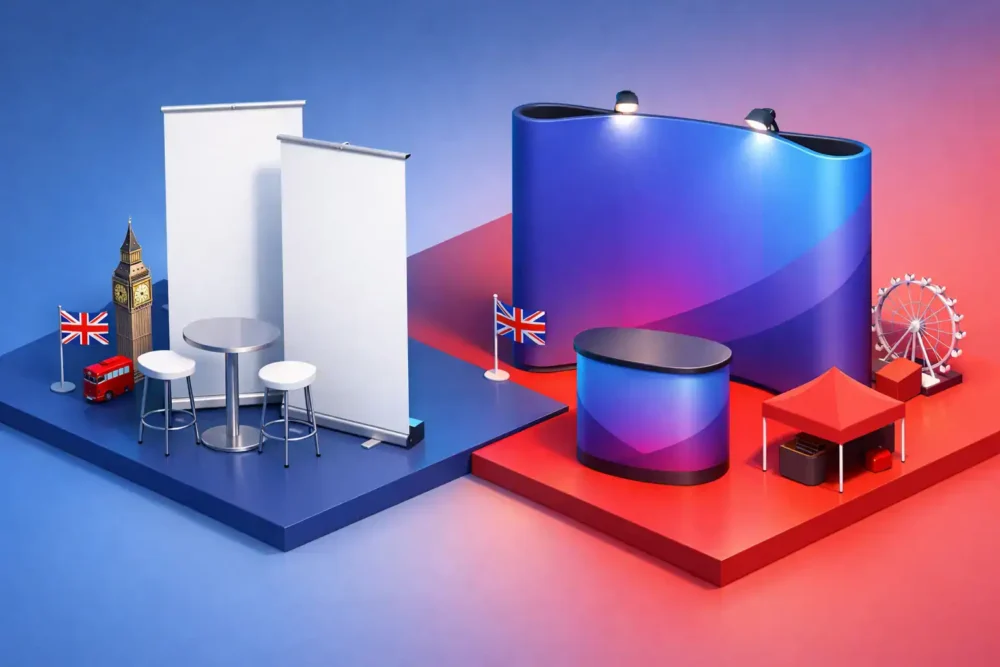
Roller banners, also called pull-up banners, use a printed graphic that retracts into a slim aluminium base. The banner pulls up, attaches to a support pole and is ready to use in minutes. Most are supplied with a carry case, making them easy to take between meetings, exhibitions and pop-up events.
Fabric displays use printed stretch polyester graphics fitted over a lightweight aluminium frame. The fabric is pulled taut to create a smooth, crease-resistant face, usually with a zip fastening around the frame. They are available in a wider range of shapes and sizes, from compact counter displays to full-width exhibition backwalls.
In simple terms, roller banners prioritise speed and individual portability. Fabric displays prioritise visual scale and a more premium exhibition finish. Neither is automatically better. The best option depends on the job in hand.
When a Roller Banner Is the Better Buy
A roller banner is hard to beat when you need clear branding at a sensible price and cannot afford complicated setup. It is particularly useful for businesses attending local trade events, recruitment fairs, networking mornings, open days or sales presentations. One person can carry it, erect it and pack it away without tools.
For retailers and service businesses, roller banners also work well near entrances, tills, reception desks and promotional zones. Their narrow footprint means they can deliver a strong message without taking over valuable floor space. A simple offer, product launch, service list or directional message is easy to read when displayed vertically.
The enclosed base provides useful protection for the graphic during transport and storage. This makes roller banners a practical repeat-use product for teams that are regularly on the road. If a sales representative needs display material in the boot of a car, a pull-up banner is far more convenient than a large framed system.
Cost is another major factor. For a business that needs several displays across branches, events or sales teams, roller banners offer excellent coverage for the budget. They can also be ordered with different messages, allowing you to tailor promotions by location or campaign without investing heavily in exhibition hardware.
There are limitations. The width is restricted compared with a fabric backwall, and the retractable mechanism means the graphic is normally single-sided. Roller banners are designed for simple, vertical messaging rather than immersive stand design. They are highly effective, but they will not create the same visual presence as a three-metre fabric display behind a staffed exhibition space.
Choose a roller banner when speed matters
Roller banners suit short-notice events, frequent travel and campaigns where the artwork may change from season to season. They are also a sensible first exhibition purchase for smaller businesses. Start with a professional pull-up banner, use a clear headline and strong branding, then add further display products as your event programme grows.
When Fabric Displays Make More Sense
Fabric displays are designed to make a stand look more considered and substantial. Because the graphic stretches across a frame, there is no visible cassette at the bottom and no pole breaking up the display area. The result is clean, continuous branding that works particularly well for large logos, lifestyle imagery and bold campaign graphics.
For exhibitors competing in a busy hall, this extra scale matters. A fabric backwall can turn a standard shell-scheme space into a recognisable branded area. It gives staff a professional setting for conversations and provides a better background for product photography, social content and team photographs.
Fabric displays are also a strong option for showrooms, office receptions, product demonstrations and media walls. The textile finish has a softer, less reflective appearance than many traditional banner materials. Under exhibition lighting, this can help graphics photograph well and remain easy to view from different angles.
The printed fabric graphic can often be washed carefully and reused, provided it is handled correctly and stored dry. If your brand keeps the same core campaign artwork for several events, the frame and graphic system can represent good value over time. Some systems also allow replacement graphics, so a new campaign does not necessarily require new hardware.
The trade-off is setup and transport. Most fabric frames are still straightforward to assemble, with push-fit sections or numbered tubes, but they take longer than pulling up a roller banner. Larger frames need more floor space during assembly and may be easier with two people. They also tend to come in a larger carry bag or wheeled case, rather than a compact banner case.
Choose a fabric display when appearance leads the decision
A fabric display is worth considering when the exhibition is a key sales opportunity, when you need a full branded backdrop or when your stand will be photographed. It is a particularly good fit for established brands, product launches and organisations exhibiting several times a year with a consistent visual identity.
Print Finish, Artwork and Readability
The display format cannot rescue cluttered artwork. Whether you choose a roller banner or a fabric system, the message must be understood quickly from several metres away. Put the logo and core promise at the top, keep essential information in the main viewing area and avoid turning the display into a full brochure.
Roller banners are best for one strong idea. A headline such as a service benefit, event message or time-limited offer should lead, supported by a small amount of secondary information. Fine text placed too low can be hidden by furniture, bags or passing footfall, so keep crucial details above waist height.
Fabric backwalls allow more room for imagery and supporting messages, but more space does not mean every inch must be filled. Large, well-positioned graphics are usually more effective than a busy layout. If the display will sit behind a counter or table, plan the artwork around the area that visitors will actually see.
Good source files make a noticeable difference to large-format print. Vector logos, high-resolution images and correctly sized artwork will produce sharper results. For teams without finished artwork, a free design service and proof approval process can remove uncertainty before production begins.
Which Display Is Better for Your Budget?
For a single promotional display, roller banners generally deliver the lowest entry cost. They are a straightforward choice when you need quality branding quickly, especially if the display may be used only a few times each year. They also keep delivery, storage and handling simple.
Fabric displays cost more upfront because they include a frame and a larger textile graphic, but they can offer stronger value where appearance and repeat exhibiting are priorities. A larger branded wall may reduce the need for several smaller signs, creating a more joined-up stand with fewer separate components.
It is useful to consider the cost per use, rather than just the purchase price. A roller banner used at monthly appointments and regional events can be excellent value. A fabric backwall used at a major annual exhibition where leads are worth thousands of pounds can be equally worthwhile. The commercial value comes from choosing a display that fits the importance of the event.
A Practical Choice for Different Situations
For a one-day conference, local business expo or mobile sales visit, choose a roller banner. It is quick, compact and gives you professional branding without adding pressure to the event setup.
For a shell-scheme exhibition stand, a fabric display is often the better visual investment, especially if your team needs a backdrop for meetings, demonstrations or photographs. A fabric wall can establish the brand presence, while one or two roller banners can support it with specific product messages or directional information.
For retailers, both can earn their place. Use roller banners for short-run promotions, seasonal offers and movable in-store messaging. Use fabric displays where a permanent or semi-permanent branded feature is needed, such as a launch area, showroom wall or photo point.
Construction, infrastructure and trade businesses may find roller banners useful at recruitment events, client presentations and public consultations, while fabric displays work well for tender presentations, stakeholder events and exhibition stands. For site-facing communication, purpose-made mesh banners, PVC banners, hoarding panels and safety signage remain the more suitable products.
The most effective display is the one that matches the setting, the audience and the level of opportunity. If you need fast dispatch, easy transport and high-quality promotion at a low price, a roller banner is a reliable choice. If the event demands a stronger visual statement, give your brand the space it deserves with a fabric display that looks the part from the first conversation to the final photograph.


