News
Do Aluminium Signs Rust? Outdoor Signage Facts

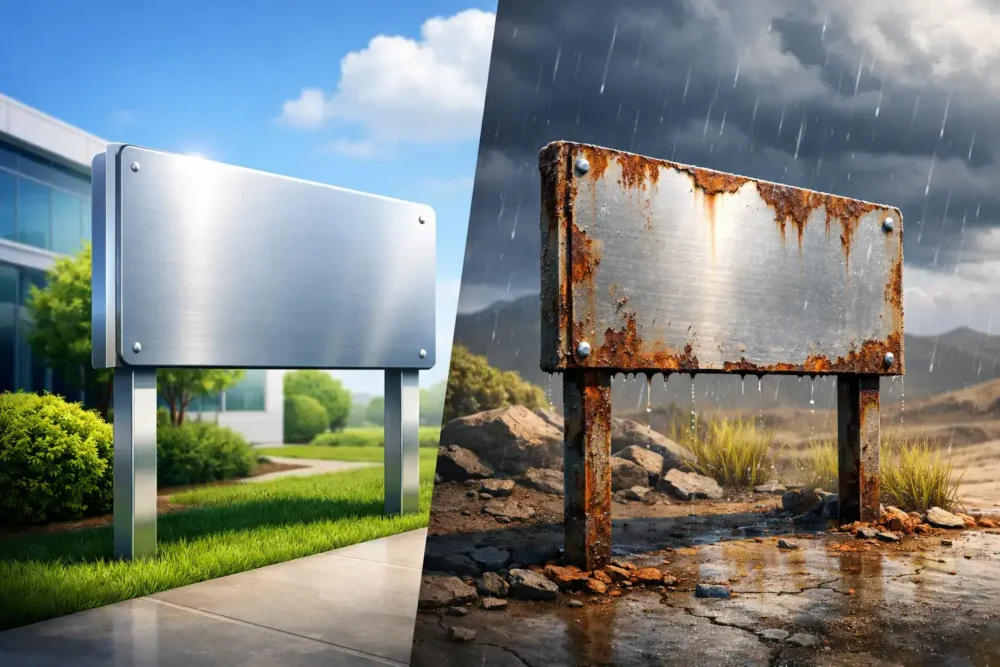
A sign installed on a wet construction site, retail frontage or perimeter fence needs to keep working long after the first spell of British weather. So, do aluminium signs rust? No – aluminium does not rust in the way steel or iron does. Rust is iron oxide, and aluminium contains no iron.
That does not mean every aluminium sign will look untouched forever. It can oxidise, collect surface staining, or suffer corrosion in harsh conditions if the material, printing method and fixings are not right for the job. Choosing the correct board and fitting it properly is what delivers a clean, professional sign that lasts.
Do Aluminium Signs Rust in UK Weather?
Aluminium has a major advantage outdoors: when its surface meets oxygen, it forms a thin, tightly bonded oxide layer. This natural layer protects the metal underneath from further attack. Unlike rust on untreated steel, which flakes and exposes fresh metal, aluminium oxide is stable and self-protecting.
For most UK businesses in retail and construction, aluminium-faced signage is an excellent low-maintenance choice. Rain, frost, changing temperatures and normal urban pollution are unlikely to cause a properly specified sign to fail. It will not develop the familiar orange-brown rust associated with steel gates, railings and cheap metal fixings.
However, buyers should avoid treating “won’t rust” as meaning “cannot weather”. Dirt, algae, salty spray, airborne contaminants and rubbing from equipment can all affect the appearance of a sign over time. In exposed or high-traffic locations, the material specification matters as much as the design.
What Happens to Aluminium Signs Instead of Rusting?
Aluminium corrosion usually looks different from steel rust. Rather than orange flakes, you may see a dulling of the surface, white or grey powdery deposits, small pits, or staining around holes and edges. This is generally a cosmetic issue at first, but it can become more significant where signs face persistent moisture or chemical exposure.
The most common causes are salt, trapped water, incompatible metals and physical damage. Coastal sites and roads treated with winter salt deserve particular attention. So do industrial locations where airborne chemicals or wash-down products are present.
A printed aluminium composite sign also has a different construction from a solid aluminium sheet. Dibond-style boards have thin aluminium skins bonded to a solid core. They are lightweight, rigid and highly suited to estate agent boards, building signs, directional signage, site information panels and branded hoarding graphics. The aluminium faces offer strong weather resistance, while the rigid board keeps the sign flat and professional-looking.
The Fixings Can Be the Weak Point
Often, a supposedly rusty aluminium sign is actually stained by something else. Standard steel screws, washers, brackets or cable ties can corrode and leave brown streaks across the sign face. The board has not rusted, but the result still looks poor.
For permanent outdoor installations, use corrosion-resistant fixings suitable for the environment. Stainless steel screws and washers are a sensible choice for many applications. Signs should also be fitted with enough clearance to prevent water sitting behind them against a wall, fence or frame.
There is a further point for demanding sites: dissimilar metals can create galvanic corrosion when they are in contact and exposed to an electrolyte such as rainwater. This is more likely in coastal conditions. Where aluminium is fixed to another metal frame, appropriate washers, coatings or isolating materials can reduce the risk. A professional installer or site manager should consider the whole fixing system, not just the printed panel.
Where Aluminium Signage Performs Best
Aluminium composite boards are popular because they balance durability, print quality and value. They are a practical choice where a PVC banner may move in the wind, or where a lightweight temporary board does not offer enough rigidity.
They work particularly well for long-term external signs such as construction site boards, safety and compliance signs, business fascia panels, wayfinding signs, property development marketing, car park notices and branded entrance signage. A full-colour UV print gives sharp graphics and clear text that can stand up to regular outdoor use.
For construction buyers, aluminium composite signage is especially useful where the message must remain visible and credible for months or years. Site rules, PPE requirements, project information, contractor branding and directional instructions all benefit from a flat, hard-wearing board that will not rust.
That said, aluminium is not automatically the best answer for every job. If you need a short-term promotion on temporary fencing, mesh or PVC Heras banners may be more cost-effective and easier to install. For very large hoardings, a mix of printed boards and banners can offer better coverage for the budget. The right product depends on lifespan, location, fixing method and the level of impact required.
How to Make Outdoor Aluminium Signs Last Longer
A good sign starts with good production, but it should also be installed and maintained with its environment in mind. There is no need for complicated upkeep, yet a few simple checks can preserve the finish and keep your branding looking sharp.
First, position the sign so rainwater can drain freely. Avoid fixing boards directly onto surfaces that hold water or create a constantly damp gap. If a sign is mounted on fencing or a frame, make sure it is supported evenly and not flexing in strong winds.
Second, use suitable fixings. Stainless steel fixings are often worth the small additional cost, particularly for permanent external signage. They help prevent rusty marks running down the face of a clean printed board.
Third, wash the sign occasionally with clean water and a soft cloth or sponge. Mild soapy water is usually enough for road film, dust and general grime. Avoid abrasive pads, aggressive solvents and high-pressure cleaning too close to the surface, as these can damage print, edges or protective finishes.
Finally, inspect signs in exposed locations. A coastal development, roadside business park or busy construction entrance may need more regular checks than a sheltered shop wall. Look for loose fixings, damaged corners, deep scratches and any gaps where water could sit. Replacing one worn fixing early is cheaper than replacing a complete sign later.
Choosing the Right Material for Your Sign Project
When comparing sign materials, focus on the job rather than just the initial price. A budget board can make sense for a brief campaign, while a longer-term project benefits from a material that stays flat, readable and presentable through repeated weather cycles.
Aluminium composite board is a strong all-round option for rigid outdoor signage. It is light enough to handle easily, stiff enough for professional mounting and resistant to rust. It also accepts high-quality full-colour print, making it suitable for both safety messaging and high-impact promotional graphics.
Foamex can be useful for indoor displays or shorter-term sheltered use, but it is generally less suited to demanding long-term outdoor conditions. PVC banners remain a highly cost-effective choice for fence lines, events and large promotional messages, especially where portability matters. For sites exposed to wind, mesh banner material allows airflow through and reduces strain on fence panels.
For a sign that must stay in place through a full project programme or represent a business permanently, aluminium composite board offers a dependable middle ground between price and durability. Custom sizing also means the panel can be designed around existing posts, gates, walls or frames instead of forcing a standard size to fit.
Can Aluminium Signs Be Used Near the Coast?
Yes, but coastal signage needs a more careful specification. Salt in the air can speed up corrosion and surface staining, especially where water remains trapped around edges, overlaps and fixings. This does not mean aluminium signs are unsuitable. It means the installation should use corrosion-resistant fittings, allow drainage and receive occasional cleaning to remove salt deposits.
If your site is directly exposed to sea spray, discuss the intended location, lifespan and fixing method before ordering. A sign for a sheltered coastal retail park has different demands from one mounted beside a harbour wall. Clear advice at the start prevents avoidable replacements later.
The Practical Answer for Long-Lasting Signs
Aluminium signs do not rust, which is one reason they are a reliable choice for UK outdoor use. Their natural resistance to corrosion, flat rigid finish and strong print performance make them well suited to commercial, construction and promotional applications.
The detail is in the specification. Use quality aluminium composite board where a durable rigid sign is needed, choose sensible fixings, keep water from sitting behind the panel and match the material to the site’s exposure. For buyers who need high-quality printed signage at a sensible price, those straightforward decisions keep a sign working hard long after it has been installed.


