News
Textile Displays That Work Harder at Events

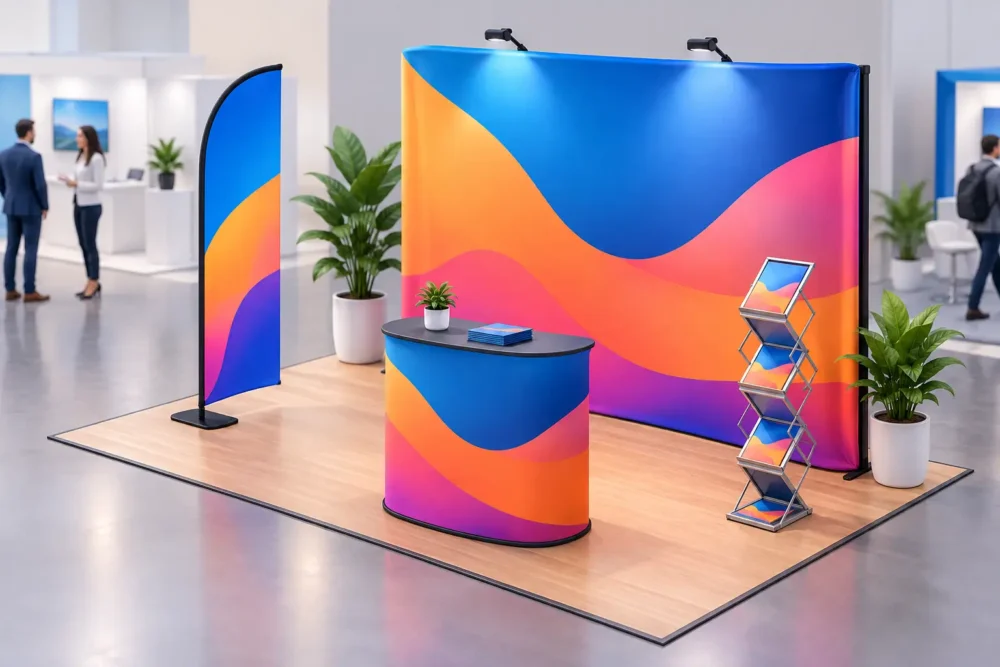
A crowded exhibition hall gives visitors seconds to decide where to look. Textile displays help businesses make that moment count, combining large-scale full-colour branding with a clean, professional finish that does not feel heavy or temporary. For exhibitors, retailers and event teams, they are a practical way to create impact without the bulk associated with traditional display materials.
Fabric graphics are widely used for exhibition stands, backdrops, branded walls, retail promotions and indoor events. They can be produced in custom sizes and fitted to a range of frames, making them a strong option when you need consistent branding across multiple locations or campaigns. The key is choosing the right system for the space, the duration of use and the way the display needs to travel.
Why textile displays are a strong business choice
The appeal of textile displays is simple: they deliver a premium visual result while remaining lightweight, reusable and easy to handle. The printed fabric stretches neatly across its frame or fits into a purpose-made channel, creating a smooth graphic surface without the reflections often seen on PVC or laminated boards.
That finish matters in places where customers are standing close to your message. Exhibition visitors, showroom customers and retail shoppers can see every detail. A well-produced fabric display presents logos, photography, colours and campaign messaging clearly, helping a stand or promotional area look organised from the first opening hour to the end of the event.
They also make logistical sense. Fabric graphics are generally easier to pack and transport than rigid panels, particularly for businesses attending several trade shows each year. Rather than arranging separate printed boards for each event, a team can reuse a frame and order replacement graphics when the campaign changes. This can reduce storage requirements and help marketing budgets go further over time.
There is a trade-off. Textile systems are best suited to indoor and sheltered promotional settings unless the specific product has been designed for external use. For exposed construction sites, perimeter fencing or roadside advertising, durable PVC banners, mesh banners and rigid signage will usually be the more suitable choice. Matching the material to the environment protects both your branding and your spend.
Choosing textile displays for the job
Not all fabric display systems serve the same purpose. Before ordering, consider where the display will be used, how often it will be assembled and how close people will be to it. A small counter display has very different demands from a full exhibition backdrop.
Exhibition backdrops and branded walls
Large fabric backdrops are ideal when you need to create an immediate focal point behind a stand, presentation area or product launch. They give a business a substantial branded presence without requiring a complicated build. A single continuous graphic can make a modest stand feel more considered and more visible from across the hall.
For best results, keep the main message large and direct. Put the logo high enough to be seen above furniture and people, use a short headline, and avoid filling every area with small text. An exhibition wall is not a brochure. Its job is to attract attention first, then support the conversation taking place in front of it.
Fabric pop-up and tension systems
Tension fabric displays use a lightweight frame with a tailored graphic pulled over or fitted around it. They are a good choice for teams that need a tidy display with repeat-use potential. Once assembled, the fabric creates a stretched, crease-resistant appearance that works well for product imagery, service messages and bold brand colours.
A pop-up or tension system suits businesses that exhibit regularly but do not want the cost, transport or installation time associated with a custom-built stand. It is also useful for internal conferences, recruitment events and corporate presentations where branded surroundings improve the overall setup.
Retail and showroom graphics
In retail, fabric displays can refresh a promotion area without making the space feel cluttered. They work particularly well for seasonal campaigns, window-facing features, product launches and branded feature walls. Unlike temporary paper posters, a properly printed textile graphic looks built for the environment.
Here, colour consistency is particularly important. Customers should see the same logo colours and visual style across your window graphics, roller banners, point-of-sale material and larger display walls. Supplying artwork that follows your brand guidelines, with suitable image quality for the finished size, gives the printer the best starting point.
Portable event displays
For networking days, local business exhibitions and promotional roadshows, portability can be the deciding factor. A display that fits into a carry case and can be assembled by one or two people saves time when access is limited or when an event venue has strict setup slots.
Look beyond the display itself. Think about whether you need a branded table cover, roller banner, flags, printed leaflets or a gazebo for the same event. Ordering compatible promotional materials together can create a more joined-up look and simplify procurement, especially for busy marketing teams managing several dates.
Print quality starts with the artwork
A textile display is only as effective as the artwork printed on it. High-resolution images, clear vector logos and correctly sized files make a noticeable difference at large format. An image that looks fine on a laptop can become soft or pixelated when expanded across a three-metre backdrop.
Build the design around viewing distance. Large headings and strong visual shapes work from across a room, while supporting detail can sit lower down for visitors who come closer. Keep essential information away from edges, zips, frame joins and areas likely to be obscured by furniture. If your display includes a fabric sleeve or tensioned finish, allow for the printer’s template and bleed requirements so the artwork sits in the right place once fitted.
Free proofs and design support are valuable safeguards when you are ordering a new format. They provide the opportunity to check copy, colour, positioning and dimensions before production begins. This is particularly useful for businesses reusing existing campaign artwork that may have originally been created for a small poster, social media graphic or brochure.
Getting the size and layout right
Bigger is not automatically better. A textile display needs to fit its setting and leave room for visitors to move, talk and view products. At an exhibition, a wall that dominates a small shell scheme may make the stand difficult to work from. In a large venue, however, an undersized backdrop can disappear among competitors.
Measure the available width and height, then account for tables, screens, shelving and lighting. If the display is positioned behind staff, make sure the central logo or key message is not hidden at head height. For retail installations, check sightlines from the entrance and from the main customer route through the shop.
The most effective layouts generally have one priority. That may be a new product, a service benefit, a contact message or a campaign line. Trying to promote everything at once weakens the display. Let the textile graphic do the high-impact brand work, then use brochures, counter cards or staff conversations for detailed information.
Care, storage and repeat use
One of the main commercial advantages of fabric displays is their potential for reuse, but this depends on sensible handling. Pack graphics dry and clean after an event, use the supplied case where possible, and avoid leaving them folded under heavy equipment. Frames should be stored with their components together so setup remains quick next time.
Most creases relax once a tension graphic is fitted to its frame, but careful packing still helps maintain the best finish. If the graphic needs cleaning, follow the material-specific care guidance rather than using harsh products that could affect the print. For high-use displays, it is worth keeping a spare graphic or updating only the fabric while retaining the frame.
Order with the full event setup in mind
A fabric backdrop is more effective when it is part of a complete display plan. Consider the space visitors see from a distance, the area where they stop to talk, and the materials they take away. The backdrop may carry your main branding, while roller banners explain key services and a branded counter creates a practical meeting point.
Big Value Banners can help businesses bring those elements together with custom print, free design support and fast UK dispatch. Whether you need a single reusable backdrop or coordinated exhibition materials for a full campaign, planning the order around the finished space helps avoid rushed add-ons later.
A well-chosen textile display should make your team feel ready before the first visitor arrives. Give it one clear job, print it properly and choose a format that suits how your business actually exhibits. The result is branding that earns its floor space rather than simply filling it.


