News
Acrylic Versus Dibond for Business Signs

A reception sign has to look sharp at close range. A construction site board has to stay readable through rain, dust and daily wear. That is why the choice between acrylic versus Dibond is not simply about appearance – it is about putting the right printed board in the right place, at the right price.
Both materials produce high-quality full-colour signage, but they perform very differently. Acrylic brings a polished, premium finish for indoor spaces and protected displays. Dibond is a hard-working aluminium composite board built for practical indoor and outdoor use. For businesses ordering signs, boards and branded displays, understanding that difference can prevent costly replacements and help your message look its best for longer.
Acrylic versus Dibond: the key difference
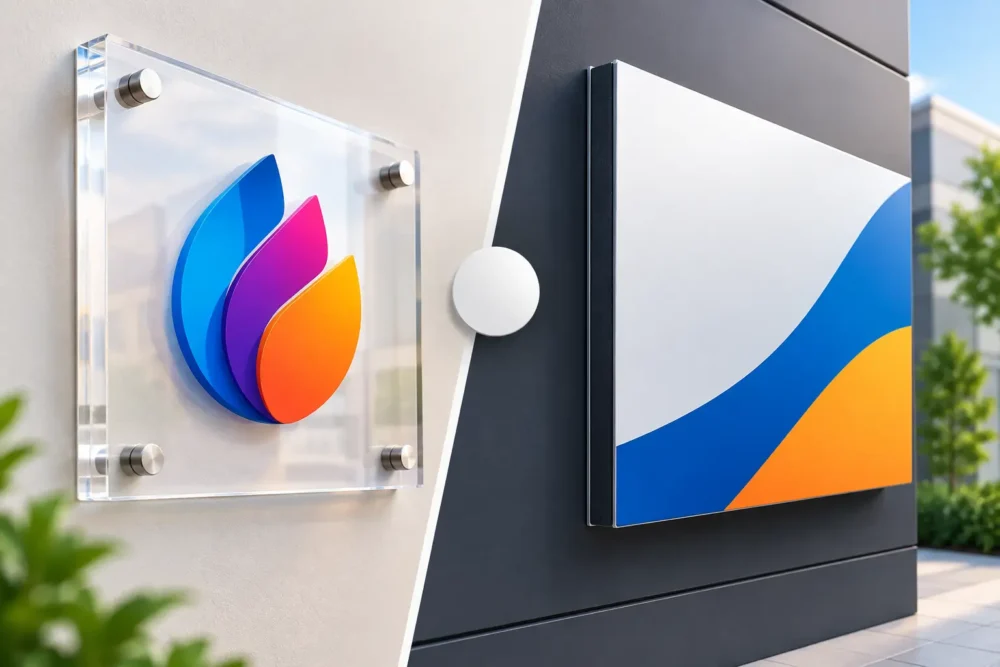
Acrylic is a clear plastic sheet, often referred to as Perspex. It has a smooth, glass-like surface that gives printed graphics, lettering and images a smart, high-end appearance. It is commonly used for reception signs, office branding, display panels, directional signs and retail interiors where presentation matters.
Dibond is an aluminium composite material. It consists of a solid polyethylene core with thin aluminium faces on both sides. The result is a lightweight but rigid board that is far more suited to regular outdoor exposure, large-format site signage and high-volume commercial use.
The fastest way to separate the two is this: acrylic is usually chosen for a premium visual finish, while Dibond is chosen for strength, versatility and long-term value. There is some overlap, particularly for indoor signs, but the environment should lead the decision.
When acrylic is the better choice
Acrylic signs are designed to make an impression. The clean surface and subtle gloss give them a professional look that works especially well in customer-facing settings. A printed acrylic panel can turn a plain reception wall into a branded focal point, while clear acrylic is ideal for signs that need to sit neatly against painted walls, timber features or exposed brick.
For offices, salons, clinics, showrooms, hospitality venues and retailers, acrylic offers an upgrade from standard printed board. It is particularly effective for logo signs, menu panels, internal wayfinding and display graphics viewed at close range. A standoff-mounted acrylic sign also creates a small gap between the board and the wall, giving it a crisp, dimensional finish.
Print methods matter with acrylic. Graphics can be printed directly onto the sheet or printed behind clear acrylic so the image is viewed through the material. The second option can protect the print surface and create additional depth, although it may cost more and is best planned with the final fixing method in mind.
Acrylic is weather-resistant, but that does not automatically make it the first choice for every outdoor application. It can scratch more easily than Dibond and is more vulnerable to cracking if hit hard or incorrectly drilled. Larger acrylic sheets can also need more careful support and fixing. It works well for sheltered external signage, such as a shop entrance or covered directory, but it is not usually the most economical board for exposed sites.
When Dibond is the better choice
Dibond is a practical favourite for businesses that need printed signs to work hard. Its aluminium faces keep the board flat and stable, while its composite core keeps the weight manageable. This makes it a reliable option for site boards, estate agent signs, retail fascias, directional signage, hoarding graphics and outdoor promotional displays.
On a construction project, signs are often exposed to changing weather, mud, handling and regular movement around the site. Dibond is far better suited to these conditions than a decorative acrylic panel. It gives you a professional, rigid sign without the weight and cost associated with solid metal.
The material is also popular for permanent or semi-permanent outdoor branding. If you need a sign fixed to fencing, gates, walls or hoarding, Dibond provides a stable surface for sharp UV-printed graphics. It is easy to cut to custom sizes, can be drilled for fixings and retains a neat appearance across larger panel sizes.
For trade customers and multi-site businesses, Dibond is often the more efficient option. It provides a dependable result for a broad range of applications, which makes specifying and reordering signs simpler. A single material can cover site rules boards, health and safety notices, directional signs, branded property boards and external information panels.
Appearance and print quality
Both acrylic and Dibond can deliver bright, detailed full-colour printing. Logos, photography, small text and corporate colours can all reproduce clearly when artwork is correctly prepared. The difference is in the finish rather than the basic print capability.
Acrylic has more visual depth. Its glossy, smooth surface reflects light and feels more refined, which makes it a natural fit for interiors where visitors will stand close to the sign. It can look particularly effective with simple branding, metallic-effect details or white print on a clear background.
Dibond has a more functional, satin-style appearance. It still looks professional, especially with high-quality UV printing, but it does not have the same glass-like finish as acrylic. For a site entrance, a retail wall sign or a large branded panel, that is rarely a disadvantage. The aim is usually clear visibility, durability and good value rather than a luxury display finish.
If glare is a concern, think about where the sign will be installed. Direct sunlight, spotlights and glazed shopfronts can all affect readability. A proof and a quick discussion about the intended location can help determine the most suitable finish before production starts.
Durability, weight and fixing
Dibond is the stronger all-round choice for demanding environments. It is designed to resist warping and cope with outdoor conditions, making it suitable for long-term external signage when fixed correctly. It is also relatively light for a rigid aluminium-faced board, which helps with transport, installation and large-scale orders.
Acrylic is rigid but less forgiving. It should be handled carefully during fitting, especially around drilled holes and corners. If holes are too close to an edge, or screws are overtightened, stress can lead to cracking. Using suitable fixings and allowing room for natural movement will help protect the panel.
For both materials, the fixing method is part of the specification. Wall-mounted signs may need drilled holes, stand-off fixings, adhesive pads or a framed system. Site boards may need timber battens, rails or secure mechanical fixings. There is no benefit in selecting a premium printed board if it is installed with unsuitable hardware.
Cost: where the value sits
Acrylic generally costs more than Dibond because of the material and the premium look it provides. It is worth the investment where the sign supports a customer experience, reinforces a high-end brand or forms part of a permanent interior fit-out.
Dibond is often the stronger value choice for businesses that need durable signage in volume. It is suitable for many more applications, particularly outdoors, and offers a professional finish without pushing the budget towards decorative materials. For construction firms, property businesses, retailers and event organisers, that balance can make a real difference across a wider signage programme.
Cheapest is not always best, but neither is choosing a premium board where a tough, practical panel will do the job better. Consider how long the sign will be used, how visible it needs to be, where it will be fitted and whether it may need replacing or updating. These details usually point to the right material quickly.
Choosing the right board for your project
Choose acrylic when the sign will be viewed closely in a reception, showroom, office, clinic, retail interior or sheltered entrance. It is the material for polished branding and a more premium presentation.
Choose Dibond when the sign needs to withstand outdoor use, regular handling or demanding site conditions. It is the dependable option for construction signage, hoarding panels, wayfinding, property boards, external branding and larger commercial orders.
For a project that includes both public-facing interiors and practical external signs, using both materials can be the most sensible approach. An acrylic reception logo can set the right first impression, while Dibond site boards, safety panels and directional signs keep the rest of the operation clear, durable and on budget.
Big Value Banners can produce custom rigid boards with full-colour UV printing, helping businesses match the material to the job rather than forcing every sign into one format. Start with the location and the working conditions, then choose the board that will still look right after the sign has done its job for months, not just on fitting day.


