
News
How to Choose Scaffolding Signage for UK Sites

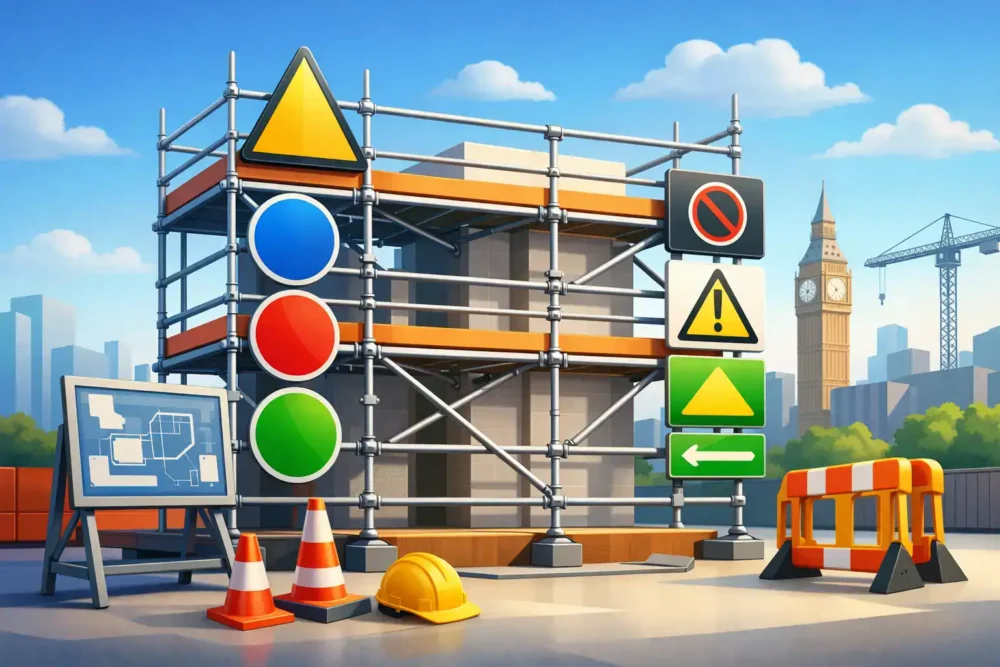
Scaffold is valuable advertising space, but it is also part of an active working site. To choose scaffolding signage properly, start with what the sign must achieve on that elevation: improve site safety, identify the contractor, promote a development, direct visitors, or cover an untidy façade. The right product needs to look professional from the street while standing up to wind, weather and day-to-day site activity.
For contractors, developers and site managers, the best answer is rarely one generic banner across every project. Site position, viewing distance, scaffold design and the length of the job all affect the material, format and fixing method. Making those decisions before artwork is approved prevents delays, poor visibility and costly reprints.
Choose scaffolding signage by site purpose
A project-facing scaffold beside a busy road has different requirements from scaffold inside a retail centre or on a short domestic renovation. Begin by separating operational signage from promotional signage. Safety notices, access directions and mandatory messages must be clear, suitably positioned and easy to read. Promotional branding can then use the remaining visible space without competing with critical information.
If the main aim is brand awareness, large-format scaffold banners offer strong impact. A company name, logo, telephone number and one concise service message normally work better than a crowded layout. People passing a site on foot or in traffic only have a few seconds to take it in. Make the most important message visible first, then support it with contact details.
For development marketing, scaffolding signage can carry CGI visuals, sales messages or a launch date. Keep in mind that a beautiful visual viewed from a pavement can lose impact if it is printed too small or broken up by scaffold poles. Ask for a proof before production and check it against the actual installation area, not just a screen mock-up.
Select a material that suits the exposure
Material choice affects appearance, lifespan and wind performance. Standard PVC banners are a popular option for sheltered locations and short to medium-term messages. They deliver bold full-colour print, a solid background and a clean branded finish. On exposed elevations, however, wind loading needs more consideration.
Mesh banners are often the practical choice for scaffold wraps and larger external displays. Their perforated structure allows air to pass through, which can reduce wind resistance while still presenting a clear printed message from a normal viewing distance. The trade-off is that colours may appear slightly less solid than on a blockout PVC banner, particularly when light passes through from behind.
Where branding needs to cover a longer run of scaffold, use several manageable panels rather than one oversized banner where appropriate. This can make installation, replacement and transport easier. It also gives you flexibility if part of the scaffold is altered during the project.
Do not treat material as an afterthought. A banner that is too heavy, too solid for its exposed position or poorly fixed can create avoidable problems. Your scaffold contractor should always confirm what can be safely attached, where it can go and which fixing approach is suitable for the structure.
Consider print quality in real viewing conditions
Full-colour UV printing gives scaffold signage strong colour and sharp detail, but the artwork still needs to be designed for outdoor use. Fine lines, pale text and small logos may look acceptable close up yet disappear at distance. High contrast is usually the safer commercial choice: dark lettering on a light background, or light lettering on a dark, uncluttered background.
Photographs and rendered building images can be highly effective, especially on development projects, but they should not carry the whole message. Add clear text that tells people who is delivering the work or how to make contact. A sign that looks impressive but says little will not generate much value.
Get the size and layout right
Measure the available scaffold bay or intended banner position accurately. Include the space needed for hems, eyelets and safe fixing points, and account for poles, ladders, lifts, access gates and temporary barriers. A banner should not obscure required access, warning signs, emergency information or sightlines around the site entrance.
Viewing distance should drive text size. Signage intended for pedestrians can carry more information than signage viewed across a main road. For a roadside elevation, use fewer words and make the company name or key campaign message dominant. If the site has several approaches, it may be better value to place different signs at key entry points than to produce one overly detailed display.
Avoid trying to turn a scaffold banner into a brochure. A strong hierarchy works best: logo or business name first, primary message second, contact method third. Include a QR code only if there is enough space for it to scan easily and it leads to a useful page. Tiny QR codes and small-print terms add clutter without helping the viewer.
Use artwork that is ready for production
Supply high-resolution files at the correct scale wherever possible. Vector logos, clear brand colours and properly licensed imagery help achieve a clean result. If you do not have print-ready artwork, free design support and a proof can remove uncertainty before the job goes to print.
Check spelling, telephone numbers, web addresses and dates at proof stage. This is particularly important for time-sensitive developments, recruitment campaigns and public-facing safety messages. Once a large banner is installed several metres above ground, correcting a simple error becomes far less straightforward.
Plan fixing, placement and maintenance
Eyelets are commonly used to secure scaffold banners, but spacing and fixing points must suit the banner size and the installation conditions. Do not rely on a few ties placed far apart. Even tension around the edge helps the banner sit flatter and reduces flapping, rubbing and strain in windy weather.
Positioning matters as much as print. Place contractor branding where it can be seen without blocking operational information. Put directional signs near the decision point, such as a delivery entrance or pedestrian diversion, rather than metres away where people have already passed the turn. For safety messaging, use plain wording, recognised symbols where relevant and a layout that can be read quickly.
Review signs throughout longer projects. Scaffold configurations change, banners can become marked, and site access arrangements may move. A faded campaign message or an out-of-date contact number can undermine an otherwise well-run site. Keeping a small budget for replacement panels is often more practical than leaving worn signage in place.
Build value across the whole site
Scaffold banners work best when they are part of a coordinated site presentation. Match them with hoarding panels, site safety boards, Heras fence banners, gate signs and vehicle graphics where needed. Consistent colours and messages make the project look organised and help visitors, neighbours and potential customers understand who is responsible for the work.
There is also a procurement advantage in planning the full sign package at once. Ordering related products together helps maintain brand consistency and reduces the risk of different sites using outdated logos or mismatched colours. It can also simplify approvals when a developer, main contractor and subcontractors all need their messages represented.
Big Value Banners produces custom scaffold banners and construction signage in Britain, with full-colour print, practical size options, free design support and fast dispatch for projects working to demanding deadlines. The useful starting point is not simply choosing the biggest banner available. Choose the format that fits the site, gives the message room to work and remains practical for the people installing and maintaining it.


