News
Printed Feather Flags for Fast Outdoor Impact

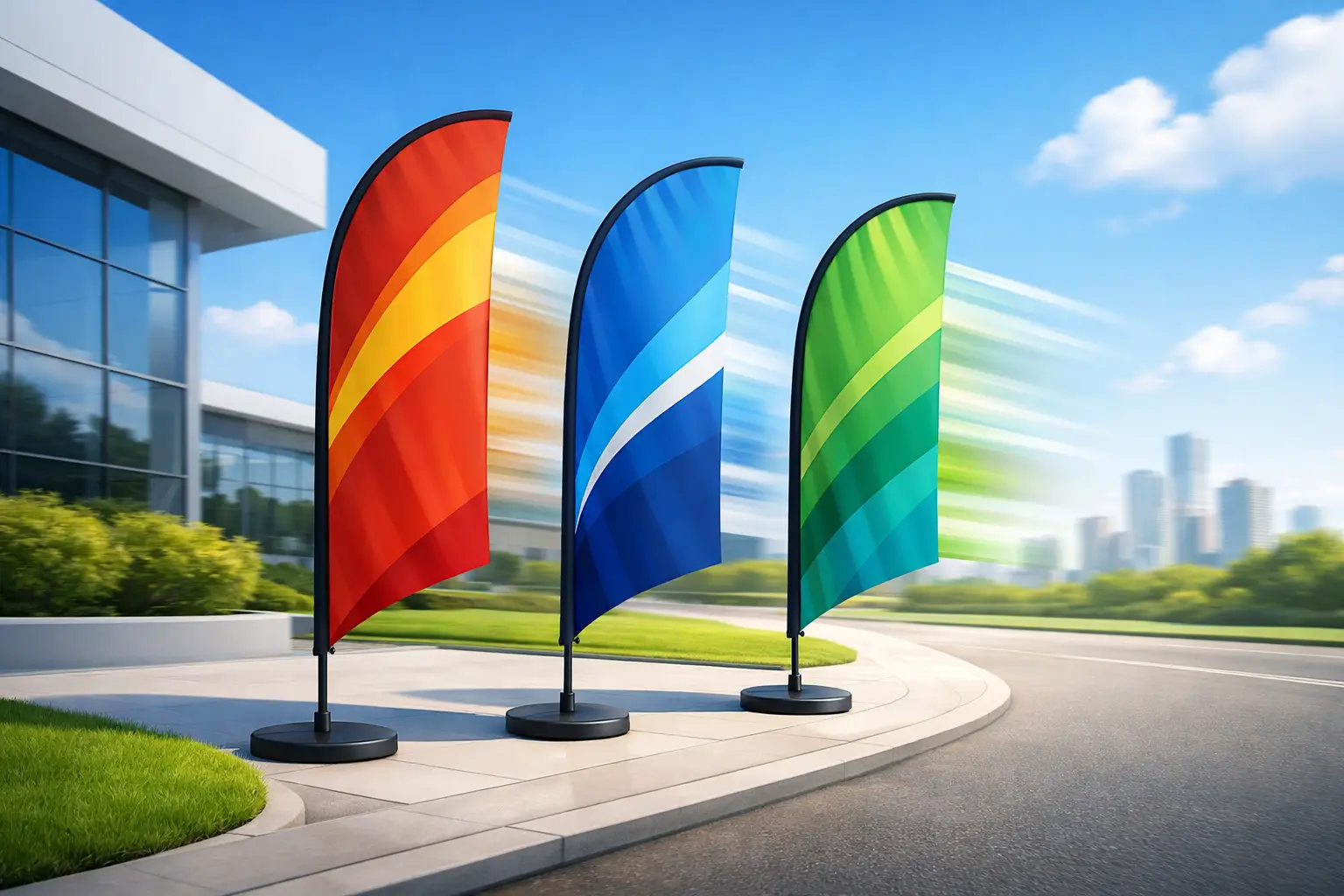
If you need to get noticed from a distance, printed feather flags do a lot of work for very little floor space. They are one of the simplest ways to add height, movement and clear branding outside a shop, at an event, on a forecourt or beside a promotional stand. For businesses that want high visual impact without a complicated setup, they are a practical choice.
What makes them effective is not just the shape. A feather flag naturally catches the eye because it sits above head height and moves in the wind, which gives your message more presence than a static sign at ground level. That matters when you are trying to pull in passing traffic, guide visitors to an entrance or make a temporary promotion visible from further away.
Why printed feather flags work so well
Outdoor advertising often comes down to a few basics – visibility, speed and value. Printed feather flags perform well on all three. They are tall enough to stand above parked cars, pavement clutter and event furniture, and they can be branded in full colour with a straightforward message that people can read quickly.
They also suit the way many businesses actually buy signage. Not every campaign needs a permanent signboard or a complex display system. Sometimes you need something that can be ordered quickly, assembled easily and used across different locations. A feather flag does that well, especially for retail promotions, open days, trade events, forecourts, leisure venues and temporary outdoor campaigns.
There is also a value argument. Compared with larger fixed signage, flags are a cost-effective way to increase presence without taking on major installation costs. If you are managing multiple sites or rotating promotions across the year, that flexibility matters.
Where printed feather flags make commercial sense
The strongest use case for printed feather flags is simple – places where people need to spot you quickly. Retailers use them outside stores to promote offers, seasonal sales and new openings. Event organisers use them to mark entrances, registration zones and sponsor areas. Car dealerships, gyms, schools, garden centres and hospitality venues use them because they lift branding into the sightline without taking up much room.
They are also useful on larger operational sites. Construction and infrastructure buyers often focus on boards, hoarding and heras banners first, which makes sense for perimeter coverage and compliance messaging. But flags can still play a useful supporting role around sales cabins, visitor access points, marketing suites and launch events. They are not a replacement for formal site signage, but they can add branded visibility where a softer promotional display is needed.
For businesses working across multiple locations, portability is another advantage. A flag that can be packed down, moved and reused gives better long-term value than one-off display material tied to a single setup.
Choosing the right size and setup
Not every site needs the tallest option available. A smaller flag can work well outside a high street premises where space is tighter and the viewing distance is short. A larger format is usually the better choice for forecourts, roadside positions, open event spaces and wide pedestrian approaches.
The right base matters just as much as the print. Indoor use usually calls for a stable base suited to flat flooring, while outdoor setups need a heavier solution or a ground spike depending on the surface. Grass, compacted ground, paving and hardstanding all require different support. Choosing the wrong base can reduce stability and shorten the usable life of the display.
This is where practical buying beats guesswork. A flag is only as good as the environment it is placed in. If it is exposed to stronger wind, positioned on uneven ground or moved frequently between venues, the hardware choice needs to reflect that.
Single-sided or double-sided?
This depends on your message and budget. Single-sided flags are a strong option for most promotional use because they are cost-effective and still deliver excellent visibility. The reverse image will usually show through in mirror form, which is acceptable for many simple logos and headline messages.
Double-sided options are worth considering when brand presentation needs to be more controlled, especially for premium events or locations where visitors approach from both directions. They look more substantial, but they will normally involve a higher cost and slightly different wind behaviour due to the added material. It is a good example of where it depends on the application rather than one option being universally better.
Design that actually gets seen
A common mistake with flags is trying to fit too much onto them. The available print area may be tall, but that does not mean every inch should be filled with text. A feather flag works best when the message is immediate. Your logo, a short promotion, a simple callout or directional wording will usually outperform a crowded layout.
Strong contrast helps. Clear brand colours, bold type and minimal wording make the flag easier to read at speed. If the flag is going near a roadside, on a busy retail park or at an outdoor event, you are often competing with vehicles, people, buildings and other signage. Simplicity wins.
Artwork should also be matched to the shape. Because feather flags are narrow and vertical, layouts need to be built with that format in mind. Stretching a standard poster design onto a flag rarely gives the best result. Tailored artwork, correct scaling and a proper proofing process help avoid weak placement, clipped text and wasted print area.
That is one reason buyers value free design support and proofs before production. It reduces errors, speeds up approval and makes sure the finished product performs as intended once it is outside.
Durability, print quality and real-world use
A printed flag has to do more than look good on day one. It needs to hold colour, withstand regular use and stay presentable through changing weather. Print quality matters because faded graphics or weak colour density quickly make outdoor branding look tired.
Material choice matters too. Flags need to balance visual finish with movement and durability. If the fabric is too heavy, the display can lose the motion that makes it effective. If it is too light or poorly produced, wear can appear faster around the edges and pole pocket. Commercial buyers usually want the middle ground – good colour, reliable construction and enough resilience for repeat use.
There is a trade-off here. No outdoor textile product is permanent, especially in exposed conditions. Strong winds, frequent transport and constant setup will all affect lifespan. That does not make feather flags poor value. It simply means they should be bought as practical promotional hardware rather than treated like a fixed sign. With sensible use, correct storage and suitable bases, they can deliver excellent return over multiple campaigns.
Fast-turnaround branding for promotions and events
One of the biggest advantages of feather flags is speed. They are well suited to businesses that need to react quickly – a weekend sale, a local event, a product launch, a new site opening or a branded pop-up. When deadlines are tight, simple products with strong impact become much more attractive.
They also work well alongside other display items. A flag can support banners, gazebos, roller banners, boards and window graphics as part of a wider branded setup. For buyers sourcing multiple products at once, that joined-up approach saves time and keeps the look consistent across the whole campaign.
For many UK businesses, that is the real appeal. It is not just about buying a flag. It is about getting a display solution that is affordable, professionally printed and ready to use without delays or unnecessary complication. That is exactly why products like this remain popular across retail, events, construction marketing and local promotion.
What to look for when ordering printed feather flags
Price matters, but it should not be the only decision point. A low-cost flag that arrives late, prints poorly or fails after limited use is not good value. Buyers should look at the full package – print quality, hardware reliability, turnaround time, proofing support and whether the product is made for commercial use rather than occasional domestic display.
It also helps to buy from a supplier that understands the wider signage picture. If your campaign may also need banners, rigid boards or event branding, working with one production partner can make procurement easier and keep artwork consistent. For businesses ordering at pace, that operational simplicity is a genuine benefit.
Big Value Banners positions this well by combining fast dispatch, competitive pricing, UK production and free design support across a broad product range. For trade buyers and businesses that need dependable service rather than sales fluff, that matters.
Printed feather flags are a smart option when you need outdoor branding that is visible, portable and cost-effective. Get the size right, keep the design clear and match the base to the ground conditions, and you will have a display product that earns its place every time it goes up.


