News
Best Retail Point Displays for Stronger Sales

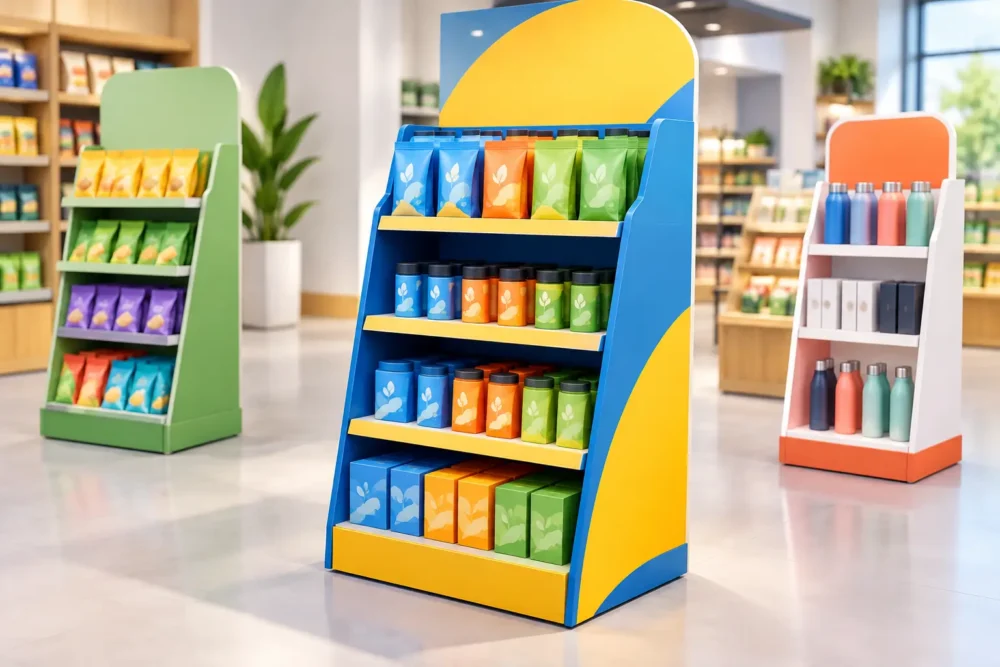
A well-timed display can turn a product customers might have walked past into an easy, confident purchase. The best retail point displays do not simply carry a logo or price – they put the right message in the right place, where people are already making decisions. For independent shops, national promotions, pop-up spaces and trade counters alike, the priority is clear: make the offer visible, credible and easy to act on.
Retail display does not have to mean a costly shop refit. Printed boards, roller banners, window vinyl, floor graphics and counter displays can all work hard when they are selected for the setting and produced to a high standard. The best choice depends on footfall, available space, promotion length and whether the display needs to move between locations.
What Makes the Best Retail Point Displays Work?
Point-of-sale display is most effective when it earns attention without creating clutter. Customers should be able to understand the product, offer or instruction in seconds. A busy visual, tiny type or too many messages will often do the opposite, particularly around a till point where queues and quick decisions are common.
Start with one job for each display. A window graphic might bring people through the door. A freestanding roller banner can introduce a seasonal range. A counter board can promote an add-on purchase, while shelf-edge or rigid board signage can help customers compare options. Trying to make one sign do every job usually weakens the result.
Print quality matters just as much as the message. Full-colour UV printing gives product images, brand colours and bold campaign graphics the impact they need in a competitive retail environment. Crisp text and strong contrast remain easier to read under mixed shop lighting, from bright window areas to artificial lighting near the counter.
The display also has to suit its working conditions. A temporary weekend promotion needs a different solution from a three-month in-store campaign. A lightweight display can be a practical choice for mobile teams and events, while rigid signage is better where durability, clean edges and a more permanent finish are required.
Choose the Right Display for the Location
The most effective retail displays are planned around customer movement. Think about the route from the entrance to the key product areas, the queue, the counter and the exit. Each point creates a different opportunity to inform, persuade or prompt a purchase.
Shop windows and entrances
Your window has only a few seconds to communicate why someone should come in. Large window graphics, PVC banners and rigid printed panels are ideal for announcing sales, new ranges, opening events or limited-time offers. Keep the main message large enough to read from the pavement and avoid covering so much glass that the shop feels closed or dark.
For promotions that change frequently, removable window vinyl offers flexibility. For a long-running campaign, more durable vinyl or mounted panels may offer better value over time. If the display faces direct sunlight, ask for materials and inks suited to maintaining a strong appearance in demanding conditions.
Aisles, shop floors and feature areas
Freestanding roller banners are a proven option for product launches, demonstrations and campaign zones. They are quick to position, easy to store and useful for retailers that need to refresh displays regularly. A roller banner works especially well where there is clear sightline space, rather than being squeezed behind stock or shelving.
Rigid Foamex or Dibond boards can create more substantial point-of-sale signage for gondola ends, wall displays and promotional bays. Foamex is lightweight and cost-effective for indoor campaigns. Dibond has a more premium, durable finish and is a sensible option where panels may be handled often or used over a longer period.
Floor graphics can direct shoppers towards a promotion, collection point or featured range. They should be bold, simple and placed where customers have enough room to see them safely. Avoid placing graphics where trolleys, queues or display stands will hide them.
Counters and payment areas
The counter remains one of the strongest locations for increasing basket value. This is where small accessories, subscriptions, loyalty offers, collection information and impulse purchases can be promoted. Counter displays should be compact, easy to scan and focused on a single action such as “Add for £5” or “Ask us today”.
A small printed Foamex board or countertop sign can be more effective than an oversized poster. It should not block staff visibility, interfere with card terminals or create friction during busy periods. If staff need to explain the offer, give them a simple message they can repeat easily.
Match the Material to the Campaign
Choosing a display material is not only about initial price. Consider how long it needs to last, how often it will be moved and whether it will be used indoors, outdoors or in both locations. Ordering the cheapest option without considering the application can lead to avoidable replacement costs.
PVC banners are a high-value choice for large promotional messages, particularly for retail parks, forecourts, market stalls and outdoor events. They are versatile, weather-resistant and available in custom sizes. Mesh banner material is useful in exposed areas because its perforations allow wind to pass through, reducing strain on fences and fixings.
For internal displays, roller banners provide a professional, portable format with a compact carry case. They are particularly useful for showrooms, concession spaces, launch events and temporary branded areas. Textile displays can deliver a softer, premium appearance for exhibition-style retail activations, though they may not be the first choice for high-contact, everyday shop floor use.
Rigid boards are dependable when you need messages fixed in place. Foamex is a practical option for short to medium-term interior promotions, while Dibond offers greater strength and a more hard-wearing finish. The right choice depends on the display location and expected lifespan, not simply the size of the sign.
Make the Message Easy to Buy From
Customers should not need to work out what a display means. Lead with the benefit, price point or product category, then support it with the essential detail. A clear “Two for £20”, “New Season Workwear” or “Collect Here” will outperform a paragraph of promotional copy.
Use large, legible type and give the message room to breathe. If your campaign includes a product image, make it relevant and strong enough to recognise at a distance. For multi-product ranges, a clean layout with a single headline and grouped information will generally look more professional than a crowded collage.
Brand consistency builds trust, especially where customers see several displays in the same shop. Use the same colours, fonts, image style and campaign wording across windows, aisles and counters. That does not mean every sign should look identical. The format can change, but the customer should recognise the promotion immediately.
Price-led campaigns need particular care. If terms apply, make them readable and accurate, but do not let small print dominate the display. The main offer still needs to do the selling. For regulated products or promotions, make sure the final artwork is checked before print, including dates, exclusions and any required wording.
Plan Production Before the Promotion Starts
A strong retail campaign can lose impact if the displays arrive late, use incorrect dimensions or do not fit the intended fixtures. Measure the available space before ordering and account for doors, shelving, product stacks, hanging rails and sightlines. For window graphics, check the visible glass area rather than relying on the overall window frame size.
Think about installation from the outset. Who will fit the display, what fixings are needed and can the team safely access the area? A large banner or rigid panel may need reinforced eyelets, drilled holes or specific mounting points. Roller banners are straightforward to assemble, but still need level floor space and protection from knocks in high-traffic zones.
Where multiple branches need the same campaign, consistency and speed become even more valuable. A supplier with custom sizing, clear proofs and dependable UK production can reduce delays and help retail teams get every location ready at the same time. Big Value Banners provides free design support and proofs, helping buyers check artwork, sizing and practical requirements before production begins.
Measure Results and Refresh What Is Not Working
Retail display should be treated as a sales tool, not background decoration. Compare sales before, during and after a promotion where possible. Ask staff which questions customers repeatedly raise, whether shoppers notice the display and whether stock moves faster from the promoted area.
Sometimes the issue is not the product or price but the placement. A banner near the entrance may create awareness but fail to convert if the product is at the back of the shop with no supporting signs. In that case, use a connected route: an entrance message, a directional floor graphic or aisle sign, then a final product display at the point of choice.
Refresh campaigns when customers stop noticing them. This does not always require new materials throughout the shop. Replacing one headline panel, updating window vinyl or changing a counter offer can make an existing display programme feel current again.
The right retail point display gives customers a reason to stop, understand and buy. Choose a format that suits the location, keep the message focused and invest in print that represents your business properly – then give every promotion the visible, practical support it deserves.


