
News
How Long Do PVC Banners Last in British Weather?

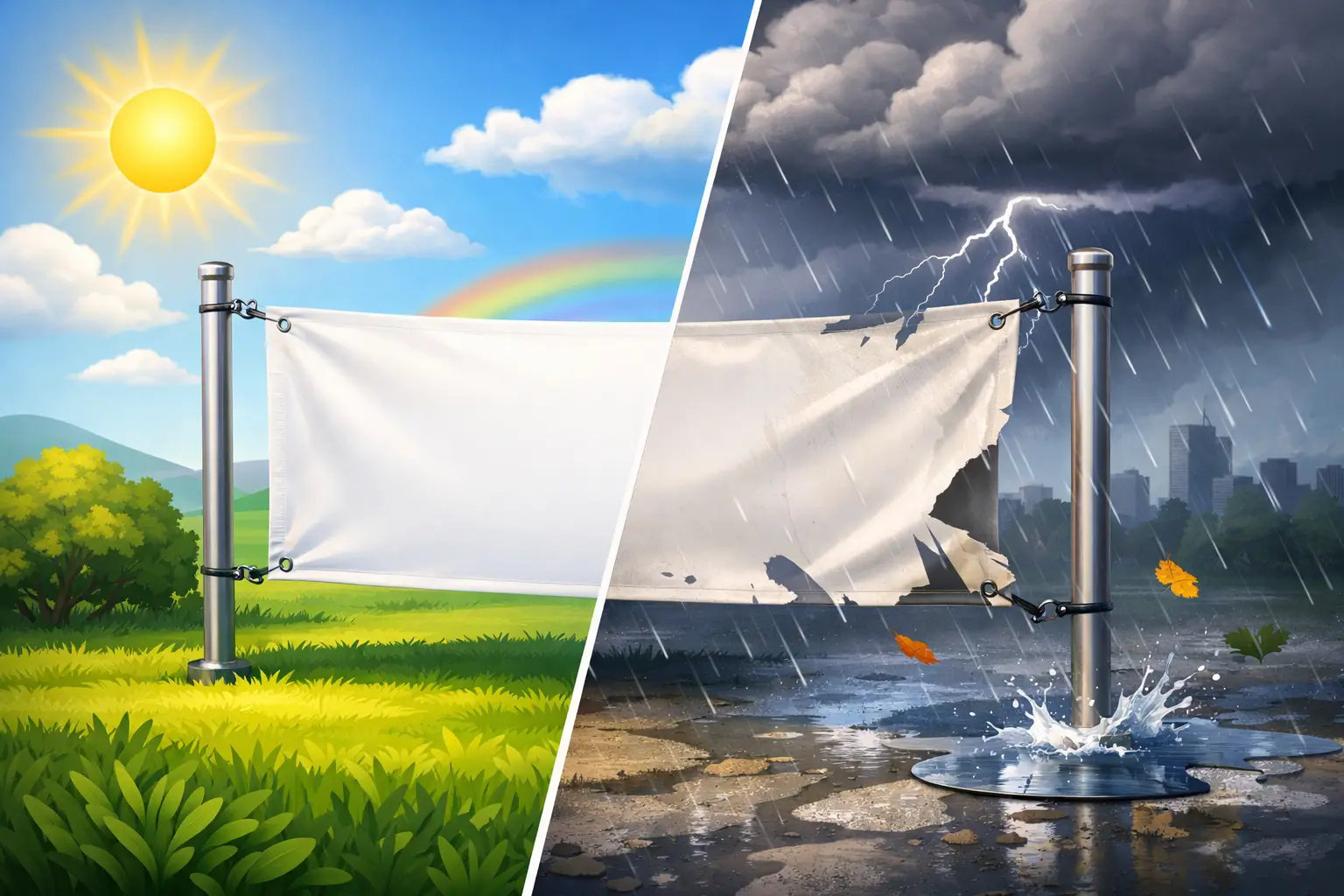
A banner that looks sharp on day one but fades, tears or sags halfway through a campaign is false economy. So, how long do PVC banners last? For most UK outdoor applications, a quality PVC banner should give around two to five years of effective service. The precise lifespan depends on where it is installed, how it is finished and the weather it has to handle.
For short-term promotions, events and retail campaigns, PVC is a cost-effective choice with plenty of life in reserve. For construction sites, fencing, roadside locations and exposed elevations, choosing the right material and fixing method makes a noticeable difference to how long the banner stays clean, taut and readable.
How Long Do PVC Banners Last Outdoors?
A standard 440gsm PVC banner, printed with quality UV inks and fitted correctly, will typically last two to five years outdoors in the UK. In sheltered positions, many remain presentable for longer. In harsh coastal, high-wind or constantly exposed locations, expect the usable lifespan to sit closer to the lower end of that range.
The print itself is rarely the first issue when quality UV printing is used. UV-cured inks are designed to resist fading from sunlight and cope well with rain. More often, the deciding factors are wind load, tension around eyelets, repeated movement against fencing and physical damage from site activity.
Indoor PVC banners can last considerably longer because they are not exposed to ultraviolet light, rain, frost or wind. A banner used occasionally at exhibitions, in a warehouse or for indoor point-of-sale can remain in good condition for five years or more when it is rolled, stored dry and handled with care.
What Affects PVC Banner Lifespan?
British weather puts every outdoor sign to work. Rain is not usually a problem for PVC banner material, which is waterproof, but wind can be. A large solid banner fixed to temporary fencing acts like a sail. If the wind repeatedly pulls at a few eyelets, the reinforced hems, eyelets and fence ties take the strain.
Location matters just as much as material. A banner mounted on a sheltered hoarding in a town centre has a much easier life than one fitted to exposed Heras fencing on a hilltop development. Coastal air, grit, salt spray and high winds can accelerate wear, while banners near busy works can be knocked by machinery, deliveries or passing foot traffic.
The size of the banner also changes the equation. A small promotional banner has less surface area for wind to catch. A large-format construction banner needs more fixings, even tension and a suitable mounting surface. Simply using the same number of cable ties on a 6-metre banner as a 2-metre banner is a common cause of tearing and loose edges.
Finishing has a direct impact on durability. Hemmed edges reinforce the perimeter, helping the material resist pulling around the eyelets. Eyelets should be spaced appropriately for the size and intended use, with additional fixings on long edges and at corners. For temporary fence installations, bungee cords can offer more give than tightly pulled cable ties, reducing stress during gusts.
Finally, the artwork affects how long a banner looks good. Dark colours and large solid blocks can show scuffs and surface dirt more easily than a well-balanced design. Fine text may still be technically printed, but it becomes harder to read from a distance as the banner gets dusty or weathered. For long-running site signage, bold branding, high-contrast text and clear contact details are the practical choice.
PVC or Mesh: Which Lasts Better in Wind?
PVC is the best all-round option when you need strong colour, a solid printed background and maximum visual impact. It is ideal for building frontages, shop promotions, event branding, site entrances and locations where wind exposure is moderate.
For Heras fencing, scaffolding and open construction sites, mesh banners are often the better long-term choice. The perforated material allows air to pass through, reducing the wind load on the banner and the fence. This can help prevent the fence from bowing, lifting or becoming unstable, while also reducing strain on the banner itself.
Mesh does involve a trade-off. Colours can appear slightly less solid because of the perforations, and small text is less effective than on standard PVC. However, for a large construction logo, development message or safety campaign viewed from a distance, it provides an excellent balance of visibility and practical performance.
There is no universal winner. A solid PVC banner in a protected location may outlast a mesh banner used on a heavily trafficked fence. But where wind is a regular concern, specifying mesh from the start can avoid replacements, damaged fencing and unnecessary downtime.
How to Make a PVC Banner Last Longer
The easiest way to extend banner life is to match the product to the installation. Before ordering, consider whether it will be fixed to a wall, a frame, a hoarding, temporary fencing or scaffolding. Each application needs a different approach to material, eyelet spacing and fixing method.
Do not overtighten the banner. It should sit flat and look professional, but excessive tension places constant pressure on the eyelets and hems. On fence panels, use enough fixings to spread the load evenly rather than relying on the corners. Check the installation after the first period of high wind, as cable ties can stretch and temporary fencing can shift.
Keep the banner away from sharp edges, protruding wire and abrasive surfaces wherever possible. If a banner rubs against a rough fence or scaffold pole every time the wind moves, it can wear through surprisingly quickly. A small adjustment when installing can save the cost of a replacement later.
Cleaning is simple but should be gentle. Wipe the surface with a soft cloth, warm water and mild soapy water where needed. Avoid solvents, abrasive pads and pressure washers at close range, as these can damage the surface or force water into stressed areas around the hems. Let the banner dry fully before rolling it up for storage.
When a campaign ends, remove the banner carefully rather than pulling it free from the fixings. Roll it with the printed face outward, keep it dry and store it somewhere clean and out of direct sunlight. Folding can create hard creases, particularly in colder weather, so rolling is the better option for banners you plan to use again.
Signs It Is Time to Replace Your Banner
A few marks do not always mean a banner has reached the end of its life. Site banners are working products, and a little dust is normal. Replacement becomes worthwhile when the message is no longer clear or the material is no longer secure.
Look for fading that weakens your brand colours, cracked or split PVC, eyelets pulling away from the edge, torn hems, deep creases, stretched corners or loose sections that flap in the wind. On construction sites, also consider whether the information is still current. An old banner displaying outdated contractor details, sold plots or expired safety messaging can create more problems than it solves.
For long-running projects, it is sensible to inspect banners as part of routine site checks. Replacing one damaged panel promptly is usually cheaper and safer than waiting for a failure during bad weather. It also keeps the site perimeter looking organised and professionally managed.
Choosing the Right Banner for the Job
Price matters, but the lowest-cost option is not always the best value once replacement costs and installation time are included. A short two-week event may only need a standard PVC banner. A year-long development project may benefit from mesh fencing banners, reinforced finishing and a design created for long-distance visibility.
At Big Value Banners, custom sizing, full-colour UV printing and practical finishing options make it easier to order for the actual site conditions rather than forcing the job to fit a standard product. A free proof is also a useful opportunity to check that logos, safety messages and contact details will be clear before production begins.
A PVC banner is a dependable, high-value signage choice when it is specified properly and installed with care. Give it the right material, enough secure fixings and a realistic role for its location, and it will keep promoting your business or project long after the first week of bad weather.


