News
Construction Signage That Works Harder

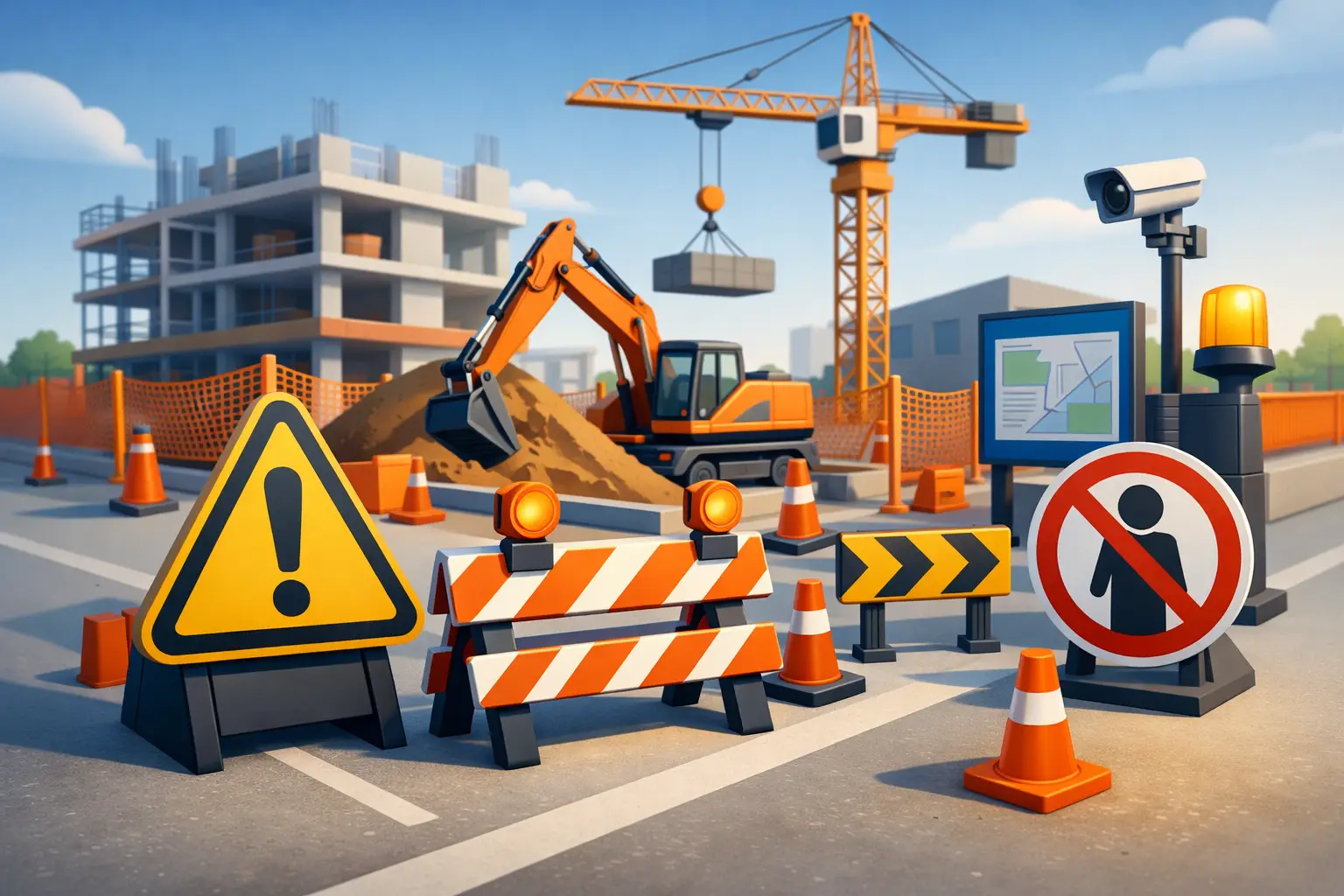
A site can look busy from day one, but if the messaging is poor, it still feels unmanaged. Construction signage does more than fill empty fencing or tick a compliance box. It tells contractors where to go, warns the public what to avoid, promotes the project to passing traffic, and gives the whole site a more professional, better organised presence.
That matters whether you are fitting out a small housing development, managing a long-term infrastructure job, or securing a temporary works area in a town centre. Good signage reduces confusion, supports site safety, and helps buyers avoid the cost of replacing under-specified products halfway through the job.
Why construction signage matters on real sites
On paper, signage can seem like a minor procurement line. On site, it is one of the first things people see and one of the few elements working every hour of the day. It needs to perform in poor weather, cope with handling, and stay readable from the right distance.
There are usually three jobs happening at once. The first is safety and information. Visitors, staff, delivery drivers and the public need clear instructions. The second is site management. Good signs improve flow around entrances, welfare areas, storage zones and restricted sections. The third is presentation. Clean, well-printed signage shows that the site is being run properly, which reflects well on the contractor, developer or principal brand.
Not every project needs the same balance. A closed commercial site may prioritise safety boards and directional signs. A roadside development may put more value on fence banners and branded hoarding panels. In most cases, the best approach is a mix rather than one product doing every job.
Choosing the right construction signage for the job
The right product depends on where it will be fixed, how long it needs to last, and what the sign is expected to do. Buyers often run into problems when they choose based on price alone and only later realise the material is wrong for the environment.
Heras fence banners and mesh panels
For perimeter fencing, Heras banners are a practical choice. They turn temporary fencing into a branded boundary, add privacy, and make better use of a large visible area. Mesh options are often the better fit for exposed locations because wind can pass through the material more easily than a solid banner.
That said, mesh is not always the automatic answer. If image quality and stronger colour density matter more than airflow, a PVC banner may suit the site better, especially in more sheltered areas. It depends on location, fence run, and how much wind loading the site is likely to face.
Hoarding panels
Hoarding panels are the stronger choice where appearance, durability and long-term display matter. They are widely used around developments in public-facing areas because they create a cleaner, more permanent visual finish. They also give you more design freedom for wayfinding, project branding, safety messaging and stakeholder information.
Rigid panels can cost more upfront than banners, but they often deliver better value over a longer programme. If a site is running for months rather than weeks, replacing cheaper materials can quickly wipe out any initial saving.
Site safety boards
Safety boards are essential because they communicate the rules of the site clearly and consistently. These usually include PPE requirements, warning notices, visitor instructions and emergency information. They need to be easy to read, correctly positioned and built from materials suited to the fixing method and expected wear.
Foamex is often a sensible option for many boards because it is lightweight, cost-effective and suitable for short to medium-term use. For tougher environments or a longer install period, more rigid materials such as Dibond can be worth the upgrade.
Directional and access signage
Even a well-run site can become frustrating if drivers cannot find the correct gate or visitors do not know where to report. Directional signage helps reduce delays, avoids unnecessary interruptions, and supports safer movement around active work areas.
This is especially important on larger sites with multiple compounds, separate contractor access points or phased works. A simple arrow board in the right place can save repeated phone calls and prevent vehicles entering the wrong area.
Material choice affects cost more than people expect
Buyers often ask for the cheapest option, but the better question is which option gives the lowest real cost across the job. Construction signage that fails early is rarely good value.
For short-term promotions or temporary messaging, banner PVC and lightweight boards can be the right call. They are affordable, quick to produce and easy to install. For higher-impact branding, repeated use, or exposed conditions, stepping up to heavier-grade banners, mesh, or aluminium composite boards makes more commercial sense.
Print quality also matters. Full-colour UV printing gives stronger visual impact and better durability for outdoor use, which is important if the signage needs to stay sharp through changing weather. Faded graphics or poorly defined text can make a site look neglected long before the project is complete.
Design needs to be clear before it is clever
A common mistake with construction signage is trying to say too much at once. A site board packed with logos, contact details, rules and promotional copy may technically contain all the information, but that does not mean anyone can read it quickly.
Distance, speed and viewing angle matter. Someone walking towards a gate can absorb more detail than someone driving past roadside hoarding. That means the layout should match the viewing context. Short messages, strong contrast and sensible font sizes usually outperform overcrowded artwork.
Branding still has a place. A smartly branded site looks more professional and can support local awareness of the development. But the visual hierarchy has to be right. Safety and directional information should never be buried under marketing graphics.
This is where design support can save time. A free proof or artwork check helps catch issues before print, which is far easier than reordering a full set of boards because the text is too small or the layout does not fit the fixing area.
Fast turnaround matters when site dates move
Construction programmes change. Access dates move, fencing goes in early, and practical completion does not always happen to the original plan. Signage buying needs to reflect that reality.
Fast dispatch is not just a convenience. It helps site teams react when phases shift, branding requirements change or safety messaging needs updating. For trade buyers and contractors handling multiple live jobs, having one supplier that can produce banners, boards and display materials in one place makes procurement simpler.
That is especially useful when you need a coordinated set of products rather than a single item. A project may require fence banners, gate signs, safety boards and hoarding panels at the same time. Sourcing them together helps keep branding consistent and avoids delays caused by splitting the order across several suppliers.
What buyers should check before ordering
Before placing an order, it pays to be clear on a few practical points. Start with location and fixing method. A board fixed to hoarding needs different properties from a banner tied to fencing. Then consider lifespan. Is the sign needed for two weeks, six months or the full build programme?
Artwork approval is another point that can slow projects if left too late. Make sure logos are supplied at usable quality and that any mandatory site wording has been signed off internally. Dimensions should also be confirmed against the actual install area, not estimated from memory. A banner that is even slightly off size can create avoidable fitting issues.
Finally, think about repeatability. If you are rolling out signage across multiple plots or phases, it helps to use a supplier that can maintain print consistency and produce matched products quickly as the project expands.
Construction signage should earn its space
Every panel, banner and board on a site takes up physical space and buying budget. It should do a job properly. The best construction signage improves safety, sharpens presentation and stands up to the conditions it is placed in. It does not need to be overcomplicated, but it does need to be fit for purpose.
For UK contractors, developers and site managers, the smart buy is rarely the sign that looks cheapest on day one. It is the one that arrives fast, prints clearly, lasts as expected and helps the site run better from the moment it goes up. If you get that balance right, your signage stops being an afterthought and starts pulling its weight.


